REVIEW · SYDNEY
Historic Walking Tour of Glebe
Book on Viator →Operated by Real History Walking Tours · Bookable on Viator
Six blocks, six eras of Glebe. This weekend walk in Sydney’s inner-west suburb puts you face-to-face with big Gothic and Victorian-era landmarks plus the homes that reveal how Glebe was shaped by both industry and the city’s wealthier crowd. I especially like the way the tour mixes dramatic buildings with clear, human stories, and I love that each stop includes free entry so you’re not hit with surprise fees.
The route is tight and doable—about 1 hour at a relaxed pace—so you get the highlights without a whole day committed. The one thing to consider is that it runs outdoors and the operator notes it needs good weather, so bring a plan for wind or rain.
You’ll start at 140 Glebe Point Rd and finish in front of St Scholastica’s College (15 Avenue Rd). It’s offered on Saturday mornings and capped at 30 travelers, which keeps the group small enough for the guide to actually answer questions.
In This Review
- Key things to know before you go
- Why Glebe’s church spires and mansion façades work so well on foot
- Price and timing: a one-hour heritage hit for $28.69
- Your Saturday-morning flow: start at 140 Glebe Point Rd, finish at St Scholastica’s
- Stop 1: St John’s Anglican Church at 138A Glebe Point Rd
- Stop 2: Glebe Presbyterian Church at 158 Bridge Rd
- Stop 3: St James’ Catholic Church at 2 Woolley St
- Stop 4: Bidura House at 357 Glebe Point Rd
- Stop 5: Hartford House at 244 Glebe Point Rd
- Stop 6: St Scholastica’s College and Toxteth Park House
- What the guide’s stories add (and how to get more out of them)
- Getting comfortable on a 1-hour walk
- Who should book this Historic Walking Tour of Glebe
- Should you book this tour?
- FAQ
- How long is the Historic Walking Tour of Glebe?
- What day and time does the tour run?
- How much does the tour cost?
- Where do I meet, and where does the tour finish?
- Is the ticket mobile?
- Are admissions included at the stops?
- Is coffee or tea included?
Key things to know before you go
- Six major heritage stops in about an hour, with frequent photo opportunities and easy transitions
- Free admission at each church and heritage building stop, so your $28.69 goes to the guiding, not ticket add-ons
- A small group cap (30 travelers) that helps the walk feel personal instead of rushed
- Addresses and landmarks you can follow easily, including Glebe Point Rd and the St Scholastica’s finish
- A guide-led story focus that links the buildings to how Glebe changed over time (expect names and plot twists like Bidura House’s detour to a children’s detention centre)
- Saturday morning timing plus a mobile ticket, which makes last-minute coordination easier
Why Glebe’s church spires and mansion façades work so well on foot
Glebe can feel like a small world of contrasts. You’ve got imposing church buildings, sandstone walls, and elegant residences packed into a walkable inner suburb—perfect for a guided route because the stories stay connected to what you’re standing in front of.
This tour works because it doesn’t treat architecture like wallpaper. Instead, you’re shown how each site fits into Glebe’s bigger story—how everyday industry and social life could sit close to grand homes, and how those same buildings later changed roles as the suburb evolved.
You also get a practical benefit: you’re not trying to “figure it out” alone. The guide gives context as you go, so you leave with more than just photos.
You can also read our reviews of more walking tours in Sydney

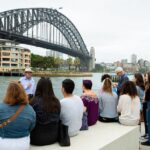
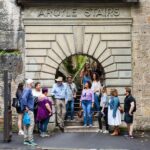
Price and timing: a one-hour heritage hit for $28.69
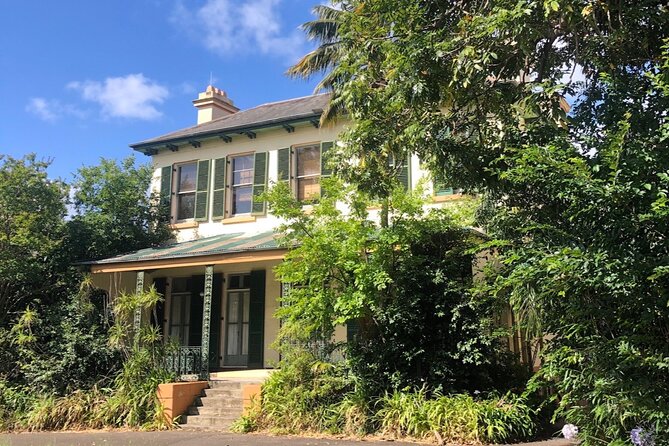
At $28.69 per person for about 1 hour, this isn’t a long day, but it’s not a skim either. You’re paying for guided interpretation: the talk that turns facades into meaning, and the pacing that keeps you moving between key addresses.
Two value points stand out. First, you’re not paying additional entry fees at each stop—each of the listed sites is free ticket admission. Second, the group size is capped at 30, which helps the tour feel like a guided walk rather than a mass orientation.
The tour does not include coffee or tea, so if you like a caffeine buffer, plan to grab it before or after. And because the operator calls out good weather as important, dress for the conditions you’ll actually face on Saturday morning.
Your Saturday-morning flow: start at 140 Glebe Point Rd, finish at St Scholastica’s
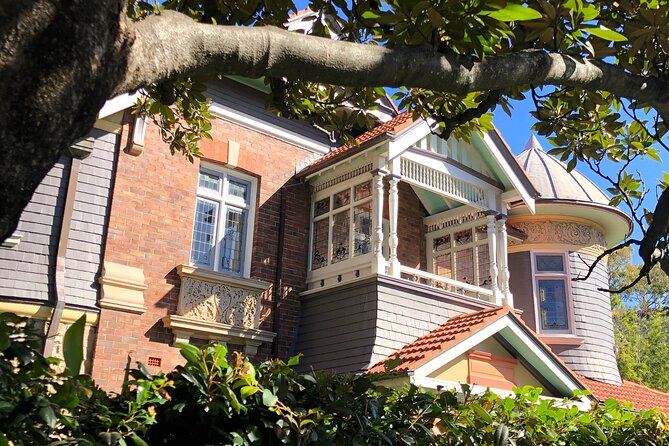
The schedule is built for efficiency. You start at 140 Glebe Point Rd and spend roughly 10 minutes per stop, with breaks that feel natural as you reposition around the suburb.
Starting at Glebe Point Rd makes sense because it’s the kind of street where the buildings visually “talk” to each other—Gothic and sandstone, then church complexes and grand houses. You’ll get that guided rhythm quickly, and it helps if you’re the type who likes to get bearings fast.
The finish is also useful: you end at the front of St Scholastica’s College on Avenue Rd. That gives you an easy endpoint for wandering on your own, or simply continuing onward on public transport.
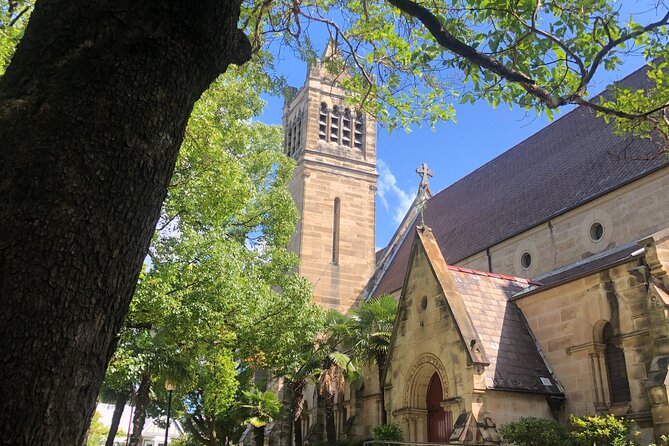
Stop 1: St John’s Anglican Church at 138A Glebe Point Rd

St John’s is the opener for a reason. It’s a massive Gothic Revival church that dominates the streetscape with a towering spire and landscaped grounds that give the building presence even before you step fully into the story.
I like this first stop because it sets the visual language of the walk. Gothic features like spires and strong vertical lines can make it easier to spot what makes the next buildings distinctive.
What to watch for: don’t just look up—look around the grounds and take in how the church sits in the street scene. The guide’s history focus here is meant to give you a baseline for understanding why this kind of landmark mattered to Glebe.
Stop 2: Glebe Presbyterian Church at 158 Bridge Rd
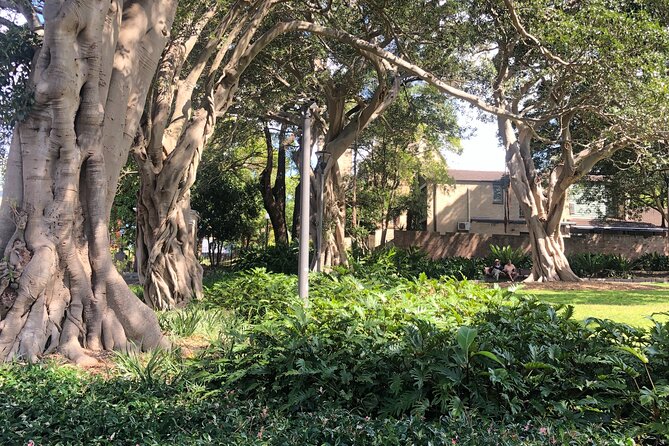
Next you move to Glebe Presbyterian Church, a dominating sandstone structure. The key phrase on this stop is its nomadic life, which hints that the building’s journey wasn’t fixed in one setting or one identity forever.
This is a good moment to slow your attention slightly. When a building’s role has shifted, the architecture can look familiar while its meaning changes. That’s where a guided explanation pays off.
Practical tip: sandstone buildings can be beautiful but can also feel visually heavy at ground level. Take a second to notice details in the façade and proportions while the guide connects them to the building’s changing story.
You can also read our reviews of more historical tours in Sydney



Stop 3: St James’ Catholic Church at 2 Woolley St
St James’ Catholic Church adds a different texture to the route. It sits in a complex of differing heritage architectural styles, so the area around the church helps you see how varied the suburb’s building past can be.
The standout here is stained-glass windows and an intriguing back story that ties the church into its surroundings. Even if you’re not a stained-glass person, you’ll likely find yourself focusing on the color and design once the guide gives you the context.
If you’re short on time in Sydney, this stop is a reminder that you can still get “wow” in an inner suburb without going far from the city core. The walking tour format gets you there efficiently.
Stop 4: Bidura House at 357 Glebe Point Rd
Now you get a sharp narrative twist. Bidura House is described as an 1860s gentleman’s residence with a chequered past, and the biggest change is its shift from a prominent mansion to a massive children’s detention centre.
This stop is one of the reasons the tour feels more than aesthetic. You’re not just admiring old walls—you’re learning how the same space can carry very different parts of social life over time.
What to do here: look for the contrast between the elegant idea of a gentleman’s residence and the seriousness of what the building later became. Even without extra details in the moment, that kind of contrast makes the story stick.
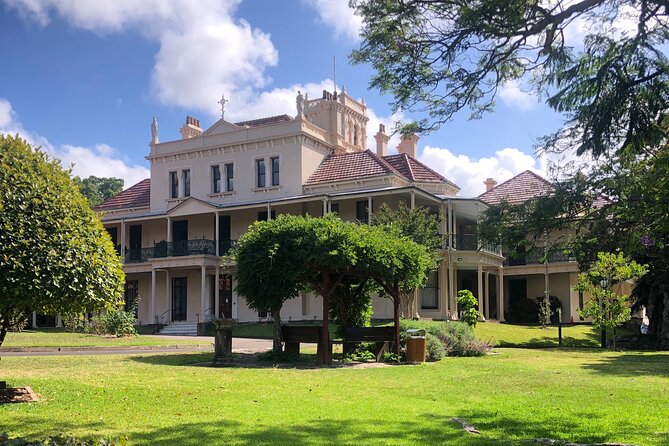
Stop 5: Hartford House at 244 Glebe Point Rd
Hartford House is another highlight, this time leaning heavily into grandeur. It’s an elaborate mansion and presented as one of Glebe’s more prestigious houses.
Compared with Bidura House, this stop tends to feel different in mood. Instead of a dramatic flip in use, you’re guided toward what the mansion represents—how wealth shaped the suburb’s built environment.
I recommend using this stop for visual comparison. Try to mentally line up what you saw at the earlier stops—church purpose, sandstone presence, mansion scale—and notice how the neighborhood’s power structures show up in the buildings.
Stop 6: St Scholastica’s College and Toxteth Park House
The tour ends with its strongest “big finish” energy. At St Scholasticas College, you’re looking at the Former Toxteth Park House, described as a former mansion of one of Sydney’s richest families.
This is the kind of stop where it helps to stand back for a second. When a building once belonged to a wealthy family, the exterior often carries that confidence in proportion and presence. The guide’s story focus helps you connect that to Glebe’s broader mix of industry and privilege.
You finish at the front of the college, so once the tour wraps, you’re not stuck wandering for a way out. You can head back into Glebe streets on your own or plan your next stop without needing to retrace the full route.
What the guide’s stories add (and how to get more out of them)
The best part of this kind of tour isn’t just knowing what you’re looking at—it’s how you learn to see it. A good guide makes connections: how churches weren’t only worship spaces, how residences weren’t only homes, and how the suburb’s mixed past left visible marks in stone, glass, and street layout.
In the write-up you’ll hear names and narrative turns that make the walk feel like a chain of cause-and-effect rather than a checklist. One of the most praised elements is how the guide can compress a lot of meaning into the time available—turning a short outing into a real learning experience.
If you want to maximize value, do two simple things:
- Ask a question when something catches you (like why a building’s role changed).
- Take one photo per stop, but spend the rest of your time really looking at what the guide points out.
Getting comfortable on a 1-hour walk
This is a short outing, but you’ll still be outside for most of it. Wear shoes you can move in comfortably on footpaths and keep an eye on the weather since the operator emphasizes good conditions.
Bring water, especially if the morning is warm. And since coffee and tea aren’t included, decide whether you want to start with caffeine or treat this as a quick history reset before your next Sydney plan.
The tour allows service animals, and pets are welcome, so plan accordingly if you’re traveling with them.
Who should book this Historic Walking Tour of Glebe
Book it if you like architecture but want meaning, too. It’s also a great choice if you’re staying in Sydney for a short trip and want to understand a distinct inner suburb without a long commute.
It fits especially well if:
- you want a guided walk that stays to about one hour
- you’re curious about how churches and mansions relate to a neighborhood’s social changes
- you prefer small groups (max 30 travelers) and a Saturday-morning vibe
It’s also a solid option for most people because it’s designed as a straightforward walking format rather than a big hiking expedition.
Should you book this tour?
If you want a short, high-impact way to learn Glebe’s story, I’d book it. The price-to-time ratio is strong, and the free-entry nature of the stops means your money goes toward the guiding and interpretation.
The only real reason to hold back is weather. If Saturday morning looks rough, plan to swap to another date when conditions are better.
FAQ
How long is the Historic Walking Tour of Glebe?
It runs for about 1 hour.
What day and time does the tour run?
The tour operates every weekend on Saturday mornings, with a start time of 10:00 am.
How much does the tour cost?
The price is $28.69 per person.
Where do I meet, and where does the tour finish?
Meet at 140 Glebe Point Rd, Glebe NSW 2037. The tour finishes at 15 Avenue Rd, Glebe NSW 2037, at the front of St Scholastica’s College.
Is the ticket mobile?
Yes, it’s a mobile ticket.
Are admissions included at the stops?
Admission tickets for the listed stops are free.
Is coffee or tea included?
No. Coffee and/or tea are not included.
You Might Also Enjoy

More Walking Tours in Sydney


More Tours in Sydney
- Blue Mountains Small-Group Tour from Sydney with Scenic World,Sydney Zoo & Ferry
★ 5.0 · 3,709 reviews


More Tour Reviews in Sydney
- Blue Mountains Small-Group Tour from Sydney with Scenic World,Sydney Zoo & Ferry
★ 5.0 · 3,709 reviews