REVIEW · BLUE MOUNTAINS
Stargazing with an Astronomer in the Blue Mountains
Book on Viator →Operated by Blue Mountains Stargazing · Bookable on Viator
Southern skies feel close in the Blue Mountains. This 90-minute night walk turns the Southern Hemisphere sky into a hands-on lesson, led by an astrophysicist with a professional telescope. You meet at the Wentworth Falls Lookout Track, then settle in for telescope views and constellation stories designed to make sense of the dark fast.
I especially like the combo of laser-guided constellation storytelling plus Q&A, so you’re not just watching—you’re learning what you’re looking at. Guides like Nathan, Tom, and Alka show up as real experts with energy, and the hot chocolate helps you stay comfortable while the sky does its slow reveal.
One thing to plan for: this experience is weather-dependent. Windy nights can change where you view from, and if conditions are poor you’ll choose between a reschedule credit or an indoor planetarium option instead of the lookout stargazing.
In This Review
- Key things to know before you go
- Why Wentworth Falls at night makes stargazing click
- Your 90 minutes: from first constellations to telescope views
- What you can see in the Southern Hemisphere (and why it changes)
- The telescope, binoculars, and laser guide: how the equipment actually helps
- Comfort details: hot drinks, warm gear, and wind reality
- Weather plan at 1pm: reschedule credit or an indoor dome show
- Price and value: what $60.97 buys you in the real world
- Accessibility and who should book (and who might skip)
- Should you book this Blue Mountains stargazing tour?
- FAQ
- How long is the stargazing tour?
- Where does the tour start and end?
- What can I see during the tour?
- Do you provide drinks?
- Is the tour accessible for wheelchairs and strollers?
- What languages are available?
- What happens if the weather is bad?
- How large is the group?
Key things to know before you go
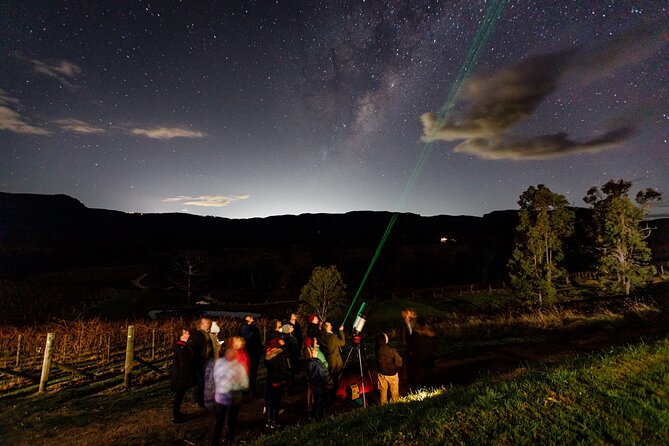
- Professional-grade telescope time with a state-of-the-art setup for Moon, planets, and deep-sky objects
- Laser-guided constellation stories that help you connect the dots in the dark
- Hot drinks and hot chocolates based on the night’s temperature
- Small group size (max 20) so you can actually ask questions
- English and French guiding for a smoother experience
- Weather plan at 1pm that can switch you to an indoor astronomy dome tour
Why Wentworth Falls at night makes stargazing click
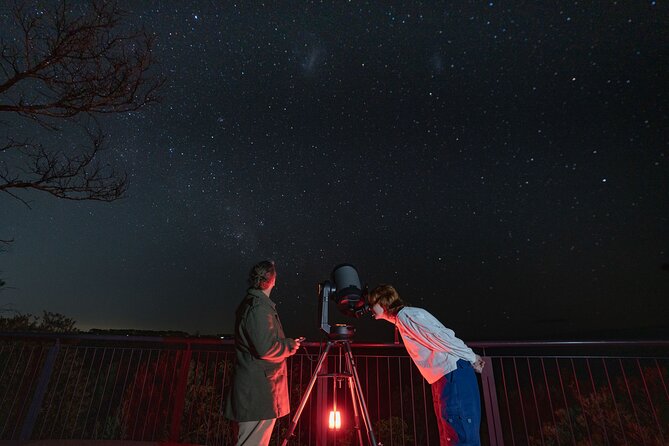
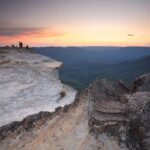
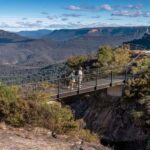
The Blue Mountains are already a strong backdrop for stargazing, but the magic here is how the night is structured around learning. You start at the Wentworth Falls Lookout Track, which is a practical choice because it puts you in the right setting for sky watching without turning the evening into a long scramble.
What I like about this tour’s approach is that it’s not “stand still and hope.” The guide walks you through what’s in front of you, and then you get to confirm those shapes with proper equipment. That matters because the Southern night sky can feel like random dots at first. Good guiding helps your eyes do the work instead of relying on guesswork.
Also, since this is capped at 20 people, you’re not fighting for attention. That makes a difference when you want to ask about something you’re seeing—like a bright planet or a patch of haze that might be a star cluster.
You can also read our reviews of more tours and experiences in Blue Mountains.
Your 90 minutes: from first constellations to telescope views
This tour runs about 1 hour 30 minutes, and the pacing is built for learning. It typically moves from naked-eye identification to telescope viewing, with interactive stops along the way.
You begin by getting your bearings. The astronomer helps you spot constellations with the naked eye, using laser-guided storytelling so you can follow along even when the group goes still and the stars are the loudest thing in the room. This is also where the tour earns points for being beginner-friendly without being childish. You’re not just given names—you’re shown how to locate them.
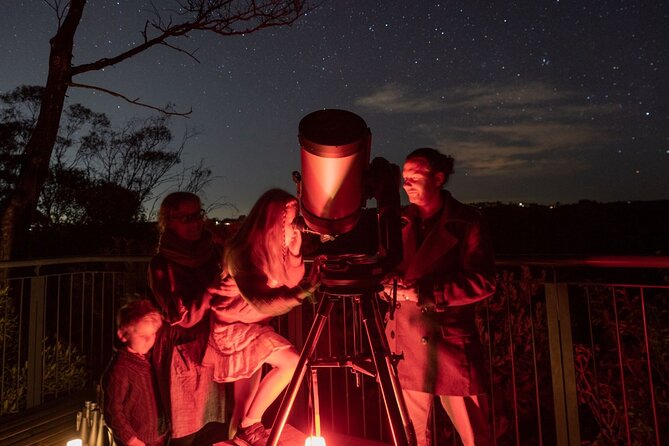
Then comes the telescope portion. The guide uses a professional-grade scope to show objects that are hard to fully appreciate with the naked eye. This is where the evening shifts from “I think I’m seeing something” to “oh wow, that’s what it is.”
Throughout, you get astronomy binoculars and time for Q&A. That Q&A is where I think most people get the most value. If you’ve got a question—Why does that object look different? What direction is that? Is that the same thing we saw earlier—the guide can tie it back to what you were learning.
And if you’re the type who likes to ask questions, the format makes it easy. Small group size keeps the answers from feeling rushed, and the guide can keep your place in the lesson even if you jump in mid-explanation.
What you can see in the Southern Hemisphere (and why it changes)
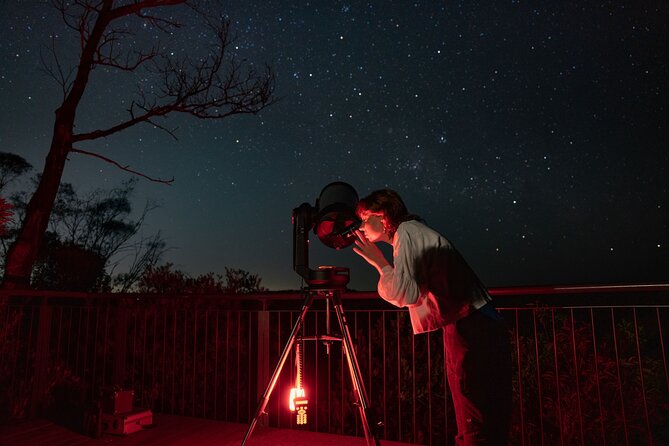
This tour is very upfront that what you see depends on the night and the time of year. That’s not a weakness—it’s reality, and it’s part of what makes stargazing worth doing.
On many nights, you might see:
- The Moon, including craters when conditions allow
- Planets such as Mars and Venus
- Saturn’s rings (if viewing conditions are right)
- Jupiter’s moons
- The Orion Nebula
- Star clusters, including double and triple stars
- Deep-sky objects like galaxies and our Milky Way
Here’s the practical takeaway: go with curiosity, not a checklist. If you’re hoping for Saturn’s rings, the sky has to cooperate, and even then it depends on what’s visible that night. The telescope time is the equalizer, because it helps you actually confirm what you’re seeing rather than guessing.
If it’s your first time seeing the Southern Cross (Crux), it can feel like a small miracle—especially because constellations tend to “arrive” as the sky darkens. The tour’s structure supports that by teaching you early, then sharpening the view as the night progresses.
The telescope, binoculars, and laser guide: how the equipment actually helps
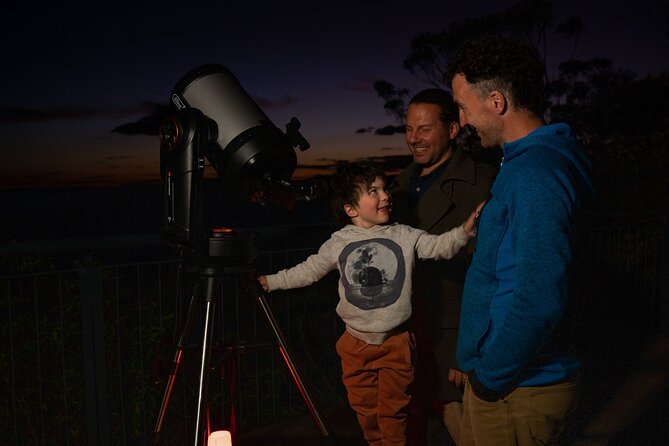
A professional telescope is the headline, but what you should care about is how it’s used. The tour provides a professional-grade telescope plus astronomy binoculars, and the guide uses laser-guided constellation storytelling to connect the sky to the equipment.
Binoculars are a big deal for first-timers. They help you see faint objects that are there but invisible to the naked eye. Then the telescope takes over for magnified views—especially for planets, lunar detail, and tight star groupings like double or triple stars.
The laser guiding is also practical. When you’re outdoors, you can’t always rely on phones or maps to explain what you’re looking at. A well-timed laser pointer helps you learn “this pattern here becomes that constellation there,” so you leave with real familiarity instead of just a memory of bright lights.
And then there’s the Q&A. This tour doesn’t treat questions as a disruption. If you want to understand what your eyes are doing—how your perspective changes at different angles—the guide can explain it in plain language during the session.
Comfort details: hot drinks, warm gear, and wind reality
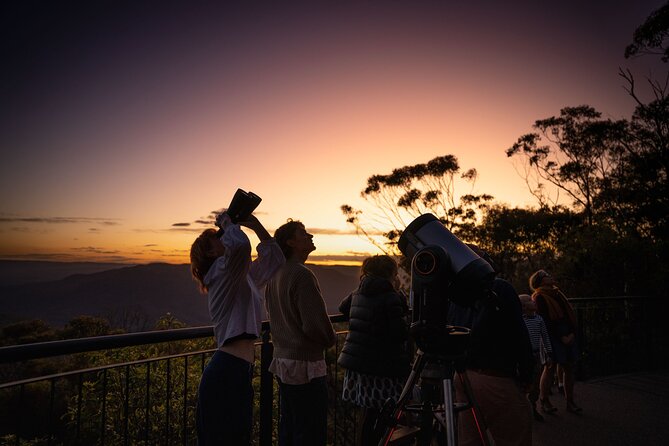
The tour includes warm or cold drinks depending on the weather, and hot chocolates are part of the experience. That’s not a small add-on. Stargazing nights can turn chilly fast, especially once the sun drops and the air settles.
I also think warm drinks improve learning. When people are uncomfortable, they lose focus. When you’re warm, you’re more willing to stare longer, track what the guide points to, and ask questions instead of rushing back to the car.
That said, you should dress like you’re planning to stand still in cool air. Even if you’re from a warmer place, Blue Mountains evenings can bring wind and temperature dips. One review highlighted that a windy night led to viewing being done in the park rather than at the lookout. So expect possible setup changes if conditions are rough.
Bring a layer you can add or remove, and think “movement is optional tonight.” Staring up requires patience, and the people most satisfied are the ones who show up dressed for the wait.
Weather plan at 1pm: reschedule credit or an indoor dome show
This is a key point for your decision: stargazing only works when the sky cooperates. The experience requires good weather, and if it’s not, you’ll get a decision at 1pm on the day.
You’ll be asked to choose between:
- Receiving a gift voucher or credit to reschedule your tour (transferable to other people and valid for 3 years)
- Attending an alternative 90-minute indoor planetarium astronomy tour, inside a dome with a powerful projector and cinema-style experience
That indoor option needs a minimum of 8 guests to run. If you’re booking close to peak season or on a busy weekend, you’re more likely to see enough people for the indoor tour to operate if needed.
One more practical note: the information provided says no refund will be offered in case of bad weather, and the posted policy also mentions options like rescheduling or a full refund if the experience is canceled due to poor weather. Because those statements both appear, I’d treat this as a “read your day-of instructions carefully” situation. When the operator emails you at 1pm, follow exactly what it says for your booking.
Price and value: what $60.97 buys you in the real world
At $60.97 per person, this tour sits in the “not cheap, but not crazy” category for a small-group, telescope-led night experience. What justifies the price is that you’re paying for expertise, equipment, and guidance—not just entry to a lookout.
You’re also getting:
- A professional-grade telescope and astronomy binoculars
- Laser-guided constellation storytelling
- Complimentary hot chocolates and drinks
- Q&A time with an astrophysicist
- English and French language support
- A maximum group size of 20
Another value angle: the tour is scheduled to teach you how to see. If you’re traveling from far away—or you’ve only ever viewed constellations from photos—this is a way to get real results in a short window. You don’t need to be a hobby astronomer. You just need a willingness to look up and ask questions.
The average booking window is about 24 days in advance, which suggests this sells steadily. If you’re traveling in a season when the sky features you want are likely visible, it’s smart to lock in early so you don’t end up chasing availability.
Accessibility and who should book (and who might skip)
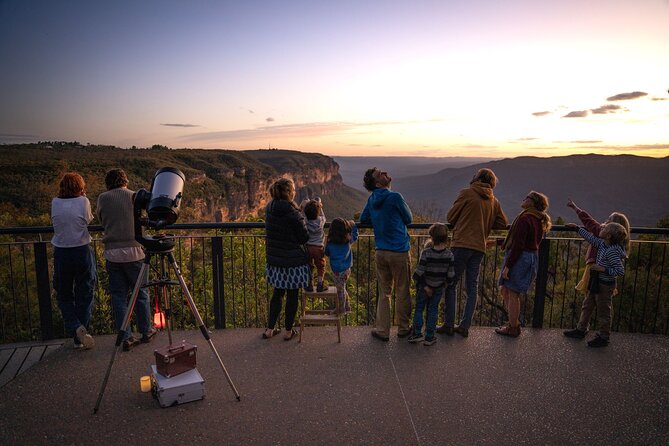
This one is built to be inclusive. It’s wheelchair and stroller accessible, and service animals are allowed. That’s a big deal for families and for anyone who doesn’t want to spend the night navigating uneven terrain.
It’s also a good fit if you want structure. You’ll get laser guidance, telescope viewing, and Q&A in a planned sequence, all within roughly 90 minutes. If you prefer a calm evening activity with real teaching, you’ll likely enjoy it.
Who might consider skipping? If you hate waiting outside, or if you’re only interested in a guaranteed list of celestial objects no matter the conditions, then weather dependence is your main risk. The guide can only show what’s visible.
But if you’re the type who enjoys learning and would be happy with whatever the sky offers that night—Moon detail, planets, clusters, or the Milky Way—then this tour matches your mindset.
Should you book this Blue Mountains stargazing tour?
I’d book it if you want a guided way to understand the Southern Hemisphere night sky, not just a dark field and a few blurry photos. The combination of laser storytelling, binoculars, and telescope time makes the experience feel complete, and the Q&A format gives you a chance to turn wonder into understanding.
I’d think twice if weather sensitivity is a dealbreaker for you, since a windy or cloudy night can change viewing conditions, and the day-of plan at 1pm is about switching to a reschedule credit or an indoor dome show. The upside is you aren’t left without an option.
If you’re visiting the Blue Mountains and want one night activity that feels special and educational, this is a strong choice—especially for first-timers who want the Southern Cross moment without guessing.
FAQ
How long is the stargazing tour?
It lasts about 1 hour 30 minutes (approx.), and the alternative indoor option is also 90 minutes.
Where does the tour start and end?
The meeting point is Wentworth Falls Lookout Track in New South Wales, Australia, and the activity ends back at the meeting point.
What can I see during the tour?
What you see depends on the night and time of year, but it may include the Moon (including craters), Mars, Venus, Saturn’s rings, Jupiter’s moons, the Orion Nebula, star clusters, double and triple stars, galaxies, and the Milky Way.
Do you provide drinks?
Yes. Warm or cold drinks are provided depending on the weather, and complimentary hot chocolates are included.
Is the tour accessible for wheelchairs and strollers?
Yes. The tour is wheelchair and stroller accessible.
What languages are available?
The tour is available in English and French.
What happens if the weather is bad?
At 1pm on the day, you’ll choose between a gift voucher/credit to reschedule your tour (transferable and valid for 3 years) or an alternative 90-minute indoor planetarium astronomy tour inside a dome. The indoor tour needs a minimum of 8 guests to run.
How large is the group?
The tour has a maximum of 20 travelers.