REVIEW · SYDNEY
Photography Essentials Workshop in Sydney Harbour Foreshore
Book on Viator →Operated by Sydney Photographic Workshops · Bookable on Viator
Sydney Harbour turns photos into a lesson.
This 4-hour workshop is a hands-on way to learn how to make images you actually feel, using the iconic foreshore as your classroom.
I really like two things right away: the tutor explains the basics with clear, easy-to-follow teaching, and you get real practice outdoors so the ideas stick. Plus, the group is kept small (max 10), which makes it easier to get help when your camera settings start acting weird.
One consideration: this is designed for cameras with full manual capability. If you only have a compact model that can’t truly shoot manually, you’ll likely feel limited.
In This Review
- Key things to know before you go
- Why this harbour-side workshop works (even if you feel rusty)
- Price and value: what $107.59 buys you in real time
- The camera reality check: what gear you should bring
- A quick look at your learning flow: from basics to control
- Composition lessons you can use on the Harbour Foreshore
- Lighting is the main event here (and it changes fast)
- Walking the foreshore: what each stop teaches you
- Stop 1: Sydney Opera House
- Stop 2: Sydney Harbour Bridge
- Stop 3: Circular Quay
- Stop 4: The Rocks area
- What group size really changes about your results
- Who this workshop is for (and who should skip it)
- What I’d do before the workshop to get more out of it
- Should you book this Photography Essentials workshop?
- FAQ
- How long is the Photography Essentials Workshop?
- Where does the workshop start and end?
- What are the main locations you visit?
- What camera types is this workshop designed for?
- How many people are in a group?
- Is the workshop affected by weather?
Key things to know before you go
- Small group size (max 10) makes it feel less like a lecture and more like guided coaching
- Manual mode training gives you creative control, not just point-and-shoot tips
- You learn all shooting modes and when to use them for the results you want
- Harbour Foreshore walking stops set you up to practice on real scenes, not stock examples
- Weather matters since the class depends on being out on location
Why this harbour-side workshop works (even if you feel rusty)
There’s a difference between watching photography videos and learning how to make a photo. This workshop hits the sweet spot: you’ll walk the Sydney Harbour Foreshore area while learning what the camera is doing and how to steer it.
The big value here is that the teacher focuses on fundamentals you can use anywhere. You’re not just snapping Opera House shots and hoping for the best. You’ll work on composition, timing, and especially lighting—the piece that changes everything from flat-looking pictures to images with depth.
I also like that the instruction is aimed at beginners and people who want a reset. If you haven’t touched your manual settings in a while, you’ll get the order of operations again: what gear matters, what settings mean, and how to pre-plan the image in your head before you press the shutter.
You can also read our reviews of more photography tours in Sydney
Price and value: what $107.59 buys you in real time
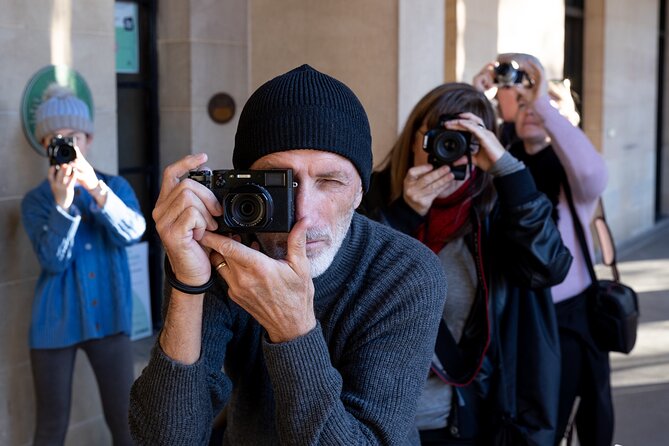
At $107.59 per person for about 4 hours, you’re paying for two things: guided instruction and time on location. That combination is where the value usually lives.
If you try to learn photography by yourself in Sydney, you’ll spend money on transit, snacks, and missed opportunities—because you won’t know what to test next. Here, you’ll follow a progression: starting from camera and lens essentials, then moving into how manual mode works, then applying it outdoors with subjects like the Opera House and Harbour Bridge.
Also, the small group size matters for value. With max 10 people, you get more chances to troubleshoot instead of waiting your turn while the scene keeps changing.
The camera reality check: what gear you should bring
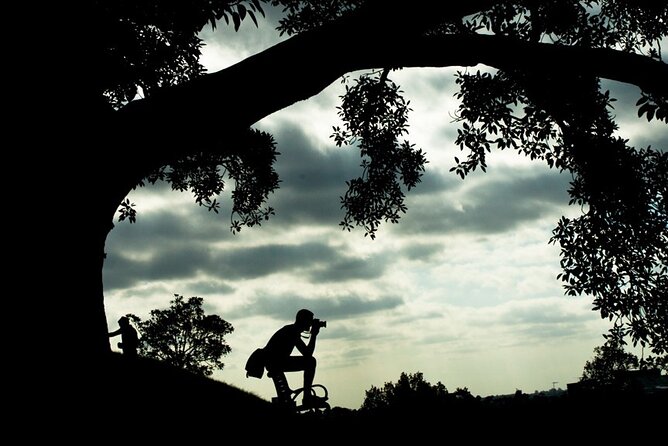
This workshop is suitable for any camera with full manual capability, including SLR and mirrorless models. That part is important, because the training is built around understanding settings and using them creatively.
It is not suitable for compact cameras without full manual capability. If you’re bringing a camera that can’t control things like shutter speed and aperture in a real way, you’ll struggle to practice what the tutor is teaching.
What I’d recommend you bring:
- Your camera with any lens you normally use
- Any essentials you already carry (extra battery, storage)
- Comfortable walking shoes, because you’ll be outdoors moving around
You don’t need to bring professional gear, but you do need the ability to experiment with settings.
A quick look at your learning flow: from basics to control
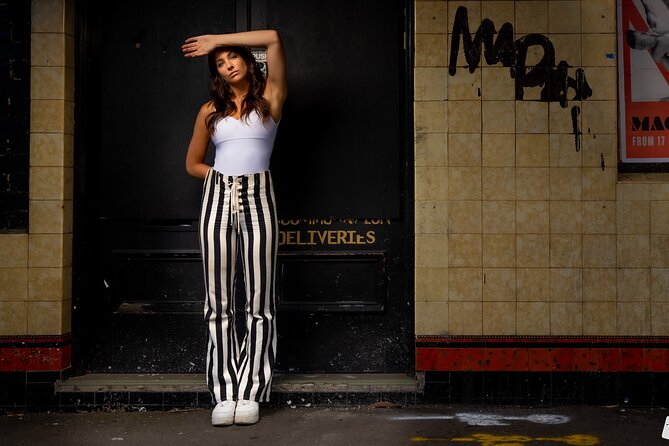
The workshop starts at the very beginning and then builds momentum. You’ll start with understanding your camera, lenses, and key kit items, then you’ll move into how different shooting modes work and when to use them.
What’s great is that modes like aperture priority, shutter priority, and program mode aren’t presented as magic tricks. You learn what each mode is good for, then you learn how to take control in manual mode.
That matters because manual mode is where you stop guessing. Once you understand what shutter speed does, what aperture does, and how ISO fits in, you can start planning your shot. The goal is to help you pre-visualise the photo before you take it—so your results feel intentional, not accidental.
Composition lessons you can use on the Harbour Foreshore
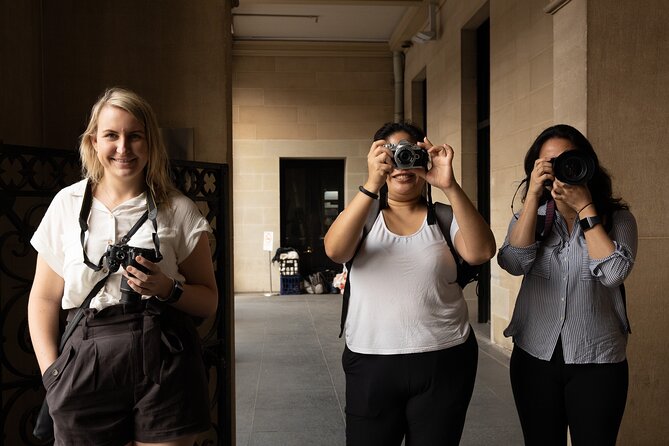
Composition can sound abstract until you’re standing where the subject is huge and the background is busy. On the foreshore, you get immediate feedback: you can see the difference between a casual frame and one that’s designed.
You’ll learn simple compositional techniques that are meant to be practical. That means you’re working with choices you can repeat:
- How to position your subject so it doesn’t look swallowed by the scene
- How to use lines and angles that lead the viewer
- How to handle the chaos of buildings, water, and railings
The best part is that you don’t just get theory. You’ll practice during an on-street walk, which is where ideas become muscle memory.
You can also read our reviews of more tours and experiences in Sydney


Lighting is the main event here (and it changes fast)
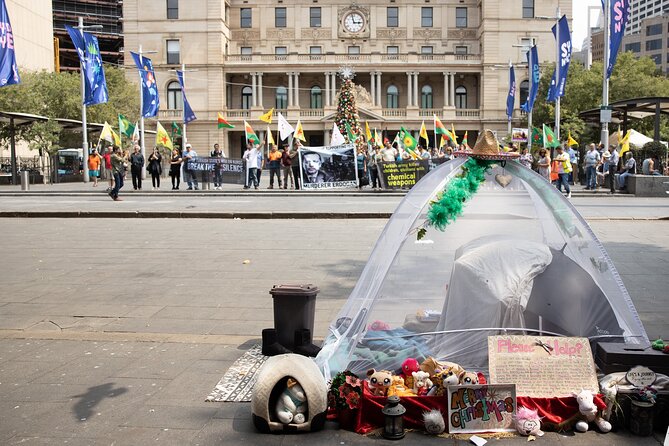
If there’s one theme that makes this workshop more than a basic starter class, it’s lighting. Light in Sydney Harbour doesn’t stay still. It shifts with clouds, haze, and the sun’s angle.
You’ll learn how to work with different lighting conditions, and that skill transfers instantly. When you understand lighting, you can shoot the same famous spot at different times and still get strong results—because you know what to adjust.
In practical terms, your tutor will help you think in terms of exposure decisions: how to keep highlights from blowing out, how to use light to shape the subject, and how to get a photo that looks like what your eyes noticed, not just a dark silhouette or a blown-out postcard.
Walking the foreshore: what each stop teaches you
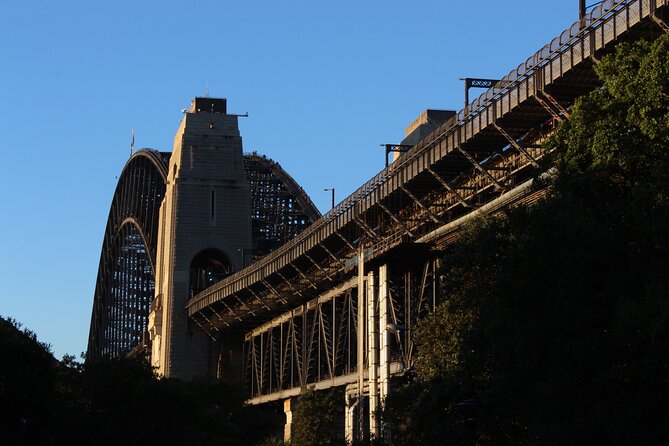
You’ll be moving between several classic harbour scenes, plus the Rocks area, which is perfect for practicing composition and storytelling.
Here’s how each stop plays in your learning.
Stop 1: Sydney Opera House
The Opera House is a high-contrast training ground. Bright reflections off the water and stone, plus strong geometry, make it easy to see what your settings are doing.
This stop is ideal for testing:
- How your shutter speed affects motion and crispness
- How aperture choices can control depth and keep attention on the subject
- How to frame without letting background clutter win
A downside to watch for: the Opera House area can get busy. If you arrive at a peak moment, you’ll need patience and quick adjustments to find a clean angle.
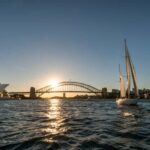
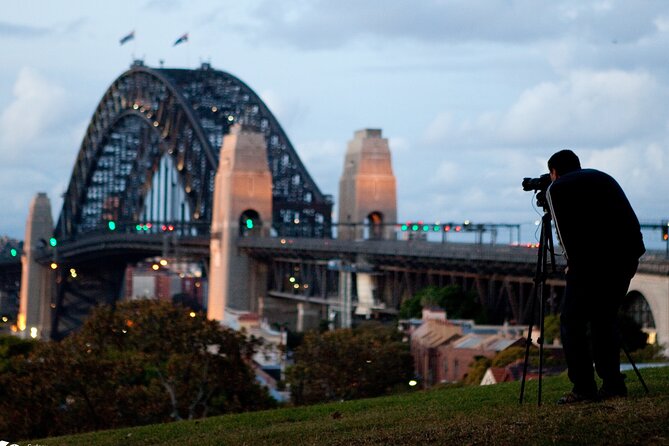
Stop 2: Sydney Harbour Bridge
The Bridge gives you long lines and strong structure. That’s a composition playground. You’ll have a chance to practice balancing the scale of the subject with the surrounding water and city details.
This is also where you can test exposure decisions under varying light—especially if clouds move in or the sun hits at a new angle.
A practical note: viewpoints can be limited depending on where you stand and what foot traffic is doing. It’s still worth it, because the Bridge is a perfect subject for learning how framing affects impact.
Stop 3: Circular Quay
Circular Quay is where your photos start to feel like real life. There’s activity, depth in the scene, and a mix of architectural and harbour elements.
This stop is useful for learning how to:
- Choose a focal point when the scene is complex
- Use framing to simplify what you see
- Adjust settings when light changes quickly across the day
The consideration here is the background density. If you don’t actively compose, the photo can look busy even when your camera settings are correct.
Stop 4: The Rocks area
The Rocks is where you’ll shift from iconic landmarks to textured streets and older-style streetscapes. This is great for learning how to create images that aren’t just famous-sight photos.
It also helps you practice storytelling. Instead of only capturing the big view, you can frame tighter scenes and look for patterns, edges, and character.
The benefit: it’s easier to build a strong composition when your subjects have texture and detail. The trade-off: you may need to adjust your approach if streets are crowded or if lighting is patchy between buildings.
What group size really changes about your results
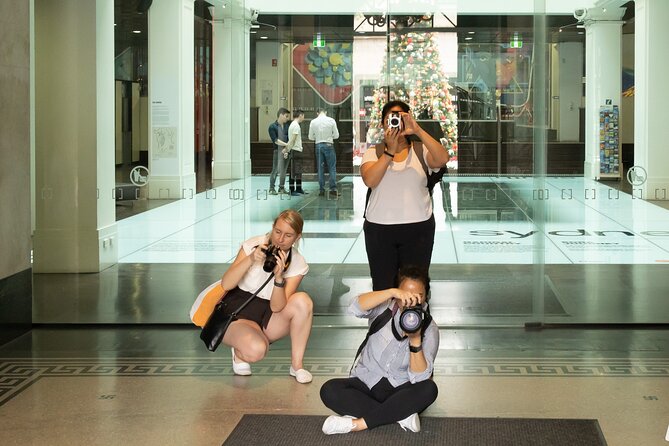
This workshop caps at 10 people. That’s not just a comfort detail. It changes how you learn.
With fewer people, it’s more feasible for the tutor to notice what you’re doing—like whether you’re stuck at one exposure style, forgetting to check ISO, or not realizing why your shot looks too bright or too dark.
In photos, small mistakes can hide in plain sight. A tighter group helps you catch those mistakes quickly, so you get more practice iterations during the session instead of walking away with only a few usable shots.
Who this workshop is for (and who should skip it)
This is a smart fit for:
- Beginners who want a structured intro to digital photography
- People who have a camera capable of manual mode but don’t feel confident using it
- Anyone who wants to learn the link between camera settings, composition, and real lighting conditions
It’s not a great fit for:
- Compact camera users without full manual capability
- Anyone expecting a purely scenic sightseeing tour with no real instruction
If you’re already comfortable in manual mode, you might still enjoy the composition and lighting coaching. But the strongest learning gains will come if you’re still building confidence with settings.
What I’d do before the workshop to get more out of it
You’ll learn camera basics during the class, but you can make the time count even more by showing up ready to test.
Here are a few practical moves:
- Set your camera to the mode you can control manually, and confirm shutter speed and aperture are accessible
- Bring a lens you know well, plus anything you commonly use
- Charge batteries fully and bring spare storage if you have it
- Expect to walk and adjust frames often, because harbour scenes change with light and people
Even if you’re nervous about shooting manually, good. That’s the right mindset for this kind of class.
Should you book this Photography Essentials workshop?
I’d book this workshop if you want a short, guided path from camera basics to real-world shooting. The best reason is the combination: instruction that goes from modes to manual control, then immediate practice around landmark scenes and the Rocks.
Skip it if you’re using a compact camera without full manual capability, because the whole point is learning how settings work in practice. And if you hate walking in the outdoors, you should think twice—there’s a moderate physical fitness expectation and you’ll be moving between scenes.
If you’re on the fence, this is the kind of class that can reset your photography fast. You don’t need to be a pro to benefit; you just need a camera that can do the job.
FAQ
How long is the Photography Essentials Workshop?
It runs for about 4 hours.
Where does the workshop start and end?
It starts at Customs House, 31 Alfred St, Sydney NSW 2000, and ends back at the same meeting point.
What are the main locations you visit?
You’ll stop at the Sydney Opera House, Sydney Harbour Bridge, Circular Quay, and The Rocks.
What camera types is this workshop designed for?
It’s suitable for cameras with full manual capability, including SLR and mirrorless cameras. It’s not suitable for compact cameras without full manual capability.
How many people are in a group?
The workshop has a maximum of 10 travelers.
Is the workshop affected by weather?
Yes. It requires good weather, and if it’s canceled due to poor weather you’ll be offered a different date or a full refund.
You Might Also Enjoy

More Workshops & Classes in Sydney

More Photography Tours in Sydney
More Tour Reviews in Sydney
- Blue Mountains Small-Group Tour from Sydney with Scenic World,Sydney Zoo & Ferry
★ 5.0 · 3,709 reviews