REVIEW · SYDNEY
Sydney Fish Market Behind the Scenes Tour
Book on GetYourGuide →Operated by Sydney Fish Market · Bookable on GetYourGuide
Tuna has a way of stealing the show. This Sydney Fish Market behind-the-scenes tour takes you onto the auction floor to see how seafood moves from “blue crates” to buyers fast. I love the way the guide makes the Dutch auction system click, and I also like the live food-prep demos like tuna filleting. One possible drawback: you’ll be on your feet early, with safety footwear involved, and it’s not set up for kids under 10.
The experience works best if you’re comfortable with a real working market vibe. You’ll need to wear/bring socks for comfort with the provided auction-floor footwear, plus a jacket and closed, comfy shoes. If you’re sensitive to the sight of live seafood during demos, plan accordingly and decide based on your own comfort level.
In This Review
- Key Things You’ll Actually Notice on This Tour
- First Step: Getting Set for the Auction Floor (Shoes, Socks, and Early Check-in)
- Inside Sydney Fish Market: What Makes This “Behind-the-Scenes” Instead of Just Watching
- The Dutch Auction System: How Price Drops Until the Buyer Says Yes
- Blue Crates and 100+ Species: Learning the Names for the Weird Ones
- Live Demonstrations: Tuna Filleting, Lobsters, Sushi Prep, and Oyster Shucking
- How the 2-Hour Format Flows (and What You Might Miss if You Skip)
- Price and Value: Is $56 for 2 Hours a Good Deal?
- Who Should Book This Tour (and Who Might Want Another Option)
- Should You Book This Sydney Fish Market Behind-the-Scenes Tour?
- FAQ
- How long is the Sydney Fish Market behind-the-scenes tour?
- What does the tour cost?
- Where do I meet the guide?
- What time should I arrive for check-in?
- Is the tour guide in English?
- Is food or drinks included?
- What should I bring?
- What footwear is required, and what’s not allowed?
- What will I see during the tour?
- Is the tour suitable for children and wheelchair users?
- FAQ
- What’s the group size limit?
- Is free cancellation available?
- Do I need to pay right away?
Key Things You’ll Actually Notice on This Tour
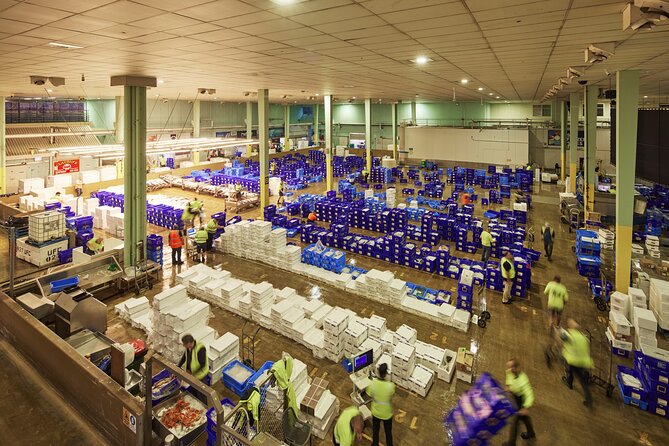
- Dutch auction in action: Watch seafood sell to 150+ buyers after the price drops in real time
- Auction floor access: See the hustle that’s normally closed to the public
- Over 100 species in blue crates: Get a “what’s in season and what looks weird” moment
- Live prep you can see clearly: Tuna filleting, live lobsters, sushi prep, oyster shucking, and more
- Small group format: Limited to 10 participants, so questions don’t get lost
First Step: Getting Set for the Auction Floor (Shoes, Socks, and Early Check-in)
The tour begins at the Sydney Fish Market at 1 Bridge Road, Glebe. Meet at the LG Information Hub on the ground level, on the side closest to the city, then you’ll get your bearings and be directed toward the tour start.
Before you ever see the auction, you’ll get the key practical setup: safety footwear for the auction floor. Bring comfortable shoes and closed-toe socks so you can stay comfortable when you’re standing and walking in a working space. Also plan for cooler early conditions; a jacket is specifically recommended.
You’ll want to arrive early because the guidance is clear: arrive by 5:50am for check-in. Even if your tour timing varies by available starting time, this early arrival matters. It’s one of those tours where being late doesn’t just inconvenience you—it can mess up the flow once the auction is underway.
You can also read our reviews of more shopping tours in Sydney
Inside Sydney Fish Market: What Makes This “Behind-the-Scenes” Instead of Just Watching
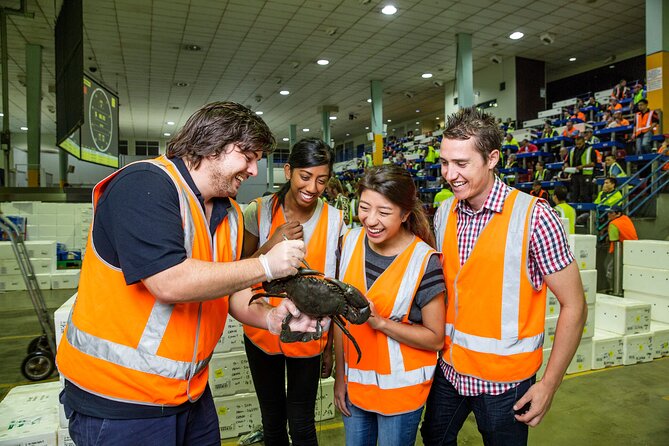
The big reason to book this isn’t scenery. It’s access to a system that’s usually hidden from the public. On this tour, you’ll step into the busy auction environment where fresh seafood is sorted, shown, and sold by the moment.
What you’ll notice first is pace. You’re not browsing slowly like you might in a shop. You’re watching the market do what it does best: move a huge volume of product efficiently, with real buyers and fast decisions.
You’ll also learn how the market thinks about quality, not just quantity. In the experiences shared by past participants, guides talked through how quality checks are carried out and how that connects to what buyers are willing to pay.
If you’re a food person, I think you’ll like the shift in perspective. Suddenly seafood isn’t just a menu item. It’s inventory, timing, handling, and trust in the chain.
The Dutch Auction System: How Price Drops Until the Buyer Says Yes
One of the tour’s headline moments is watching the Dutch auction system in action. This isn’t just a quick explanation; you’ll see how it works while seafood is being sold.
Here’s the practical idea you’ll come away with: buyers don’t simply bid back and forth forever. Instead, the auction system drops the price until a buyer accepts. That means momentum and timing matter, and it’s built for markets where product freshness and volume are moving fast.
During the tour, you’ll hear how seafood is sold to 150+ buyers, and that more than 50 tonnes of seafood can move through the process. That scale helps you understand why the auction setup is so structured. When the market runs like this, there’s no time for hesitation.
If you’ve ever wondered why fish pricing feels mysterious, this part helps you connect the dots. You’re watching the mechanism behind the numbers you see on menus and in seafood counters.
Blue Crates and 100+ Species: Learning the Names for the Weird Ones
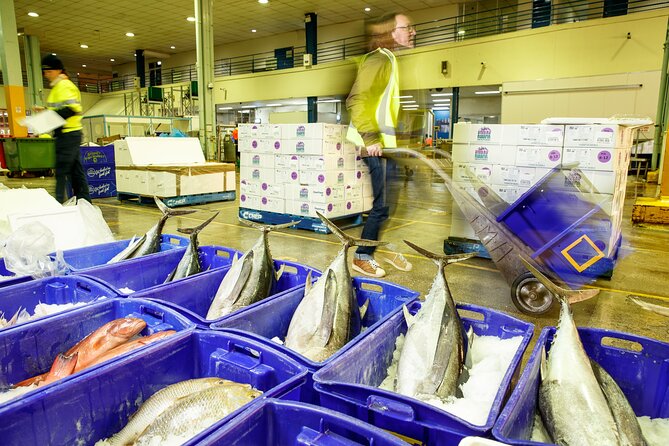
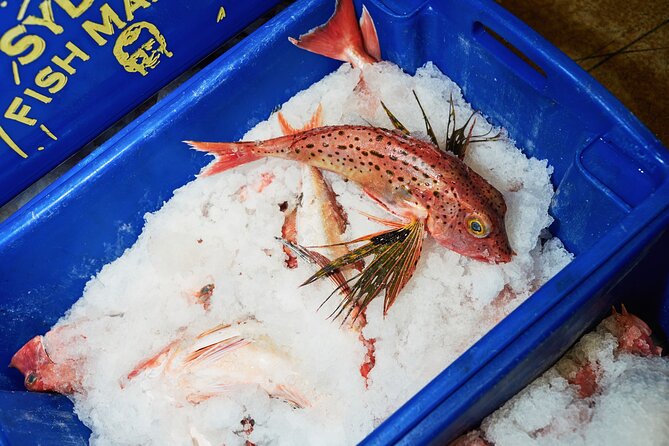
The Sydney Fish Market is famous for its selection, and this tour leans into it. You’ll see over 100 seafood species in the famous blue crates, with options that range from familiar favorites to the oddballs that make you do a double take.
I like this part because it trains your eye. After the tour, you’re more likely to recognize what’s available and why certain species show up more often than others. Even if you don’t remember every name, you’ll remember the variety—and that makes ordering seafood later feel less intimidating.
You’ll also get examples of species you might not know to look for. The tour is designed to give you that “I didn’t realize this existed” moment, which is fun even if you only eat seafood occasionally.
One more thing: seeing the species in crates gives you context about handling and presentation. It’s not plated and styled. It’s raw inventory. That can be a little different from what you’re used to in restaurants.
Live Demonstrations: Tuna Filleting, Lobsters, Sushi Prep, and Oyster Shucking
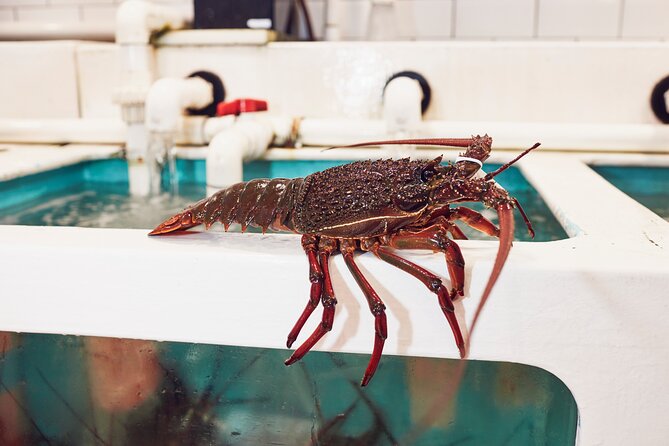
This tour earns its keep with live seafood preparation demonstrations. You don’t just hear about how things work—you see the process in real time.
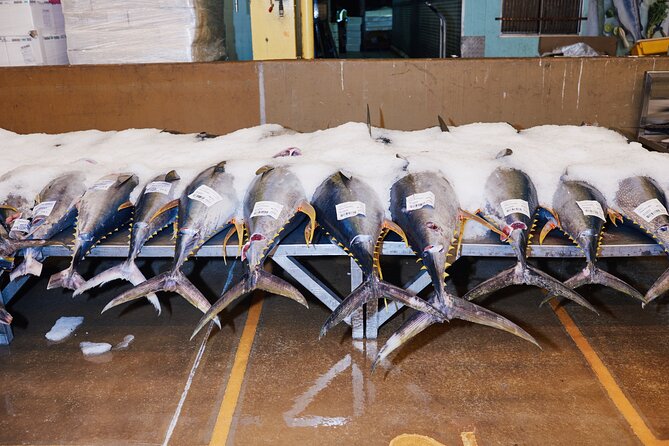
Expect to see tuna filleting, live lobsters, sushi prep, and oyster shucking. There may be other prep demonstrations too, but those are the anchor examples that define the experience.
Why this matters for you: live prep turns abstract seafood knowledge into muscle memory. You start to understand portioning, speed, and how chefs and seafood workers think about texture and freshness. Even if you don’t cook professionally, you’ll likely walk away with more confidence when you’re ordering or shopping.
It’s also a great reality check. Some people assume seafood preparation is slow and ceremonial. Here, you’ll see how quickly work happens when the supply chain is active.
If you’re worried about visuals, treat this as a working demonstration, not a staged show. It’s hands-on, it’s practical, and it’s honest about what seafood looks like before it becomes dinner.
You can also read our reviews of more tours and experiences in Sydney


How the 2-Hour Format Flows (and What You Might Miss if You Skip)
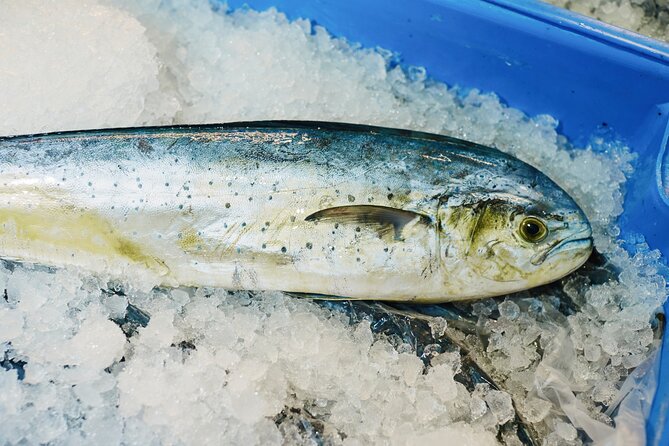
This tour runs for 2 hours, which is a smart length for a working market. You get enough time to see the auction environment, learn the Dutch auction concept, and take in the species overview. You also get live prep demonstrations without turning the experience into an all-day production.
The flow is structured around movement through the market areas you can access with a guide. You’ll start in the market foyer area, then transition into the auction floor experience where the real action happens. After that, you spend time focused on species and demos so you’re not just watching bids—you’re connecting bids to product.
A small group helps here. The tour is limited to 10 participants, so it’s easier to ask questions and get explanations that match what you’re looking at. If you go with a big group elsewhere, you can feel invisible. Here, you’re more likely to actually understand what you’re seeing.
The main drawback of a tight time window is that you’ll want to pay attention from the start. If you show up late to check-in, or you spend too much time watching without listening, the “why” can slip away. This is one of those tours where understanding matters as much as the visuals.
Price and Value: Is $56 for 2 Hours a Good Deal?
At $56 per person for a 2-hour guided experience, the value is mostly about access and explanation.
You’re paying for three things that are hard to recreate on your own:
- Access to the auction floor area that’s normally closed to the public
- A live guide who explains how the auction works and what quality checks look like
- Live preparation demonstrations, including tuna filleting, oyster shucking, and sushi prep
The tour also includes safety footwear for the auction floor, which is a real cost and convenience factor. And because it’s a small group, you’re not paying for a crowded lecture. You’re paying for a guided walk that’s focused on what matters.
One detail to factor in: food and drinks are not included. This isn’t a meal tour. Plan to eat before or after, so you don’t end up hungry while you’re trying to listen. For many people, that’s an easy trade. You’re here to learn the market, not to snack through it.
Overall, I think this price makes sense if you’re even mildly curious about where seafood comes from. If you already know every species by name and you’ve watched auctions before, you might feel less impact. But for most visitors, the auction + species + live prep combo is exactly what you came for.
Who Should Book This Tour (and Who Might Want Another Option)
This tour fits best if you like food facts that have real-world purpose. It’s ideal for people who want to understand why seafood is priced the way it is and what happens before the plate.
It’s also a strong choice for anyone who enjoys live demos and doesn’t mind a hands-on working environment. Seeing tuna filleting and watching oyster shucking live can be genuinely eye-opening, even if you’re not a “food geek.”
But there are clear limits:
- Not suitable for children under 10
- Wheelchair users aren’t supported on the auction floor
- No wheelchairs or prams allowed on the auction floor
If you rely on mobility aids, this may be difficult. The tour’s structure centers on the auction environment, and that space has rules for safety and access.
Should You Book This Sydney Fish Market Behind-the-Scenes Tour?
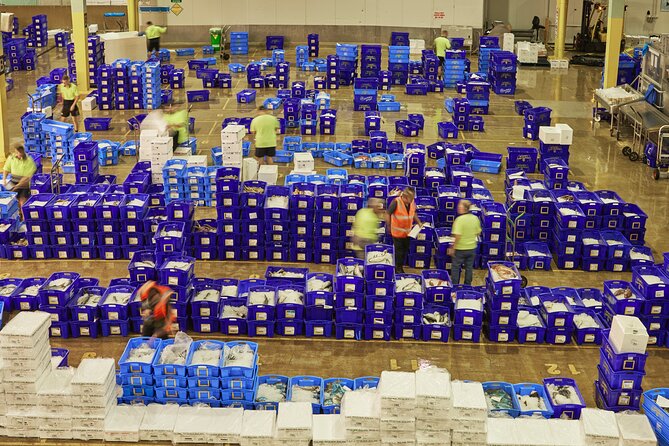
I’d book it if you want the real story behind seafood in Sydney, not just a surface-level market visit. The Dutch auction explanation, the access to the busy auction floor, the over 100 species in blue crates, and the live demos like tuna filleting and oyster shucking make it feel focused and worth the time.
Skip it if you want a relaxed, stroller-friendly, sit-and-sip experience. Also skip it if you’re uncomfortable with the working-market feel or the sight of live seafood during preparation demos.
If you show up prepared—closed shoes, socks, jacket—and you’re ready to learn how the market runs, you’ll leave with a stronger sense of what you’re eating and why it’s handled the way it is.
FAQ
How long is the Sydney Fish Market behind-the-scenes tour?
The tour lasts 2 hours.
What does the tour cost?
It costs $56 per person.
Where do I meet the guide?
Meet at the LG Information Hub, Sydney Fish Market, 1 Bridge Road, Glebe (ground level, side closest to the city).
What time should I arrive for check-in?
Arrive by 5:50am for check-in.
Is the tour guide in English?
Yes, the live tour guide is in English.
Is food or drinks included?
No, food and drinks are not included.
What should I bring?
Bring comfortable shoes, a jacket, and socks.
What footwear is required, and what’s not allowed?
Safety footwear is provided for the auction floor. Open-toed shoes, high-heeled shoes, and hats are not allowed.
What will I see during the tour?
You’ll see the auction floor, the Dutch auction system in action, over 100 seafood species in the blue crates, and live preparation demonstrations including tuna filleting, live lobsters, sushi prep, and oyster shucking.
Is the tour suitable for children and wheelchair users?
Children under 10 are not suitable. No wheelchairs or prams are allowed on the auction floor, and wheelchair users are not suitable.
FAQ
What’s the group size limit?
The tour is a small group limited to 10 participants.
Is free cancellation available?
Yes. You can cancel up to 24 hours in advance for a full refund.
Do I need to pay right away?
No. You can reserve now & pay later.
You Might Also Enjoy


More Shopping Tours in Sydney
More Tours in Sydney
- Blue Mountains Small-Group Tour from Sydney with Scenic World,Sydney Zoo & Ferry
★ 5.0 · 3,709 reviews


More Tour Reviews in Sydney
- Blue Mountains Small-Group Tour from Sydney with Scenic World,Sydney Zoo & Ferry
★ 5.0 · 3,709 reviews