REVIEW · SYDNEY
Convicts and The Rocks: Sydney’s Walking Tour Led by Historian
Book on Viator →Operated by Journey Walks · Bookable on Viator
Convict stories meet cobbled lanes. This The Rocks walking tour uses a local crime historian to connect convict-era arrivals to the way Sydney’s waterfront neighborhood took shape. I love the small group size (15 max), because it keeps pace comfortable and questions actually get answered. One thing to plan for: parts of The Rocks include unavoidable stairs, and rain makes footing more important.
My second favorite touch is what you get at the start: Customs House includes an interior visit, not just a photo stop. You also leave with a visual folder of historic imagery, maps, and portraits, which helps you keep the stories straight as the city moves on around you.
In This Review
- Key highlights you’ll notice right away
- Why The Rocks still tells convict-era stories
- Meeting at Circular Quay: start inside the story at Customs House
- Customs House stop: sandstone facade, ship arrivals, and the view from above
- Macquarie Place Park relics: First Fleet anchor, Edwardian lavatory, and the Obelisk of distances
- Tank Stream Fountain: the hidden water source under your feet
- The Rocks walking segment: back alleys, cobbled lanes, pubs, and street-gang lore
- The Argyle finish: wrap up near historic stores and pubs
- Small-group format: why max 15 makes the stories stick
- Timing and pacing: about 2.5 hours, heavy on walking but not extreme
- Weather, clothing, and shoe advice for The Rocks
- Price and value: what $37.30 buys you in real terms
- Who this tour fits best (and who might want something different)
- Should you book this Convicts and The Rocks walking tour?
- FAQ
- What is the duration of the Convicts and The Rocks walking tour?
- How much does the tour cost?
- Where does the tour start and where does it end?
- How many historic sites and stories are covered?
- Is Customs House entry included?
- Is food included?
- Is the tour suitable for most people?
- Does the tour run in bad weather?
- What group size should I expect?
Key highlights you’ll notice right away
- Crime historian guide focused on convict crime, street gangs, and how people changed the neighborhood
- Customs House visit inside, plus a scale model view of Sydney from above
- Macquarie Place Park relics, including the First Fleet anchor and an Obelisk of distances
- Tank Stream Fountain, built on top of the colony’s original fresh-water story
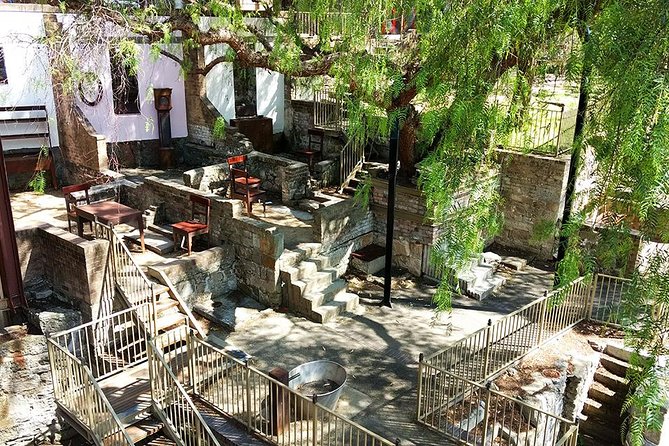
- The Rocks back-alleys walk, where pubs, lanes, and old houses turn into a living map
- Finish in Argyle Stores area, with local-style places to keep exploring
Why The Rocks still tells convict-era stories
The Rocks is one of those places where the streets feel older than the modern city around them. That’s exactly the point of a convict-focused walk: you’re not just looking at buildings, you’re learning why people ended up here and how the area turned from rough waterfront housing into a lasting part of Sydney.
This tour is built around the early convict years and the shifting character of the area. You’ll hear stories that link convict arrivals, sailors, and street-level conflict to the everyday reality of living near Sydney Cove.
You can also read our reviews of more walking tours in Sydney

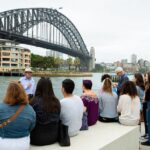
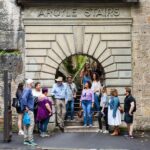
Meeting at Circular Quay: start inside the story at Customs House
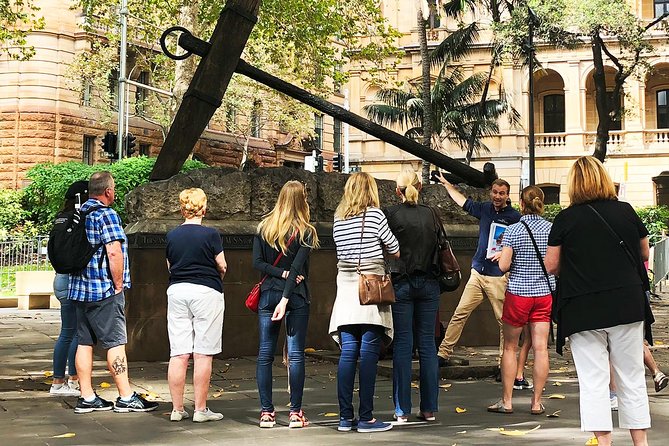
You begin in front of Sydney’s Customs House at Circular Quay, at the Journey Walks meeting spot on the right-hand side of the building as you face the entrance. It’s a handy start because Circular Quay is the geographic “hub” of Sydney Cove, and it keeps the tour’s theme tied to the port.
The intro is short and practical, and then you’re off. If you want to get oriented fast on day one, this kind of start helps you see the city as a set of connected places instead of a bunch of landmarks.
Customs House stop: sandstone facade, ship arrivals, and the view from above
At Customs House, you’ll unpack the big role this building played as a gateway for people and goods arriving by ship through the 19th and 20th centuries. Outside, the sandstone facade gives you the “serious government” vibe. Inside, it shifts to something more visual and easier to grasp.
The tour includes an entry inside Customs House, where you can see a scale model of Sydney from above. That model matters. It helps you understand where you are in relation to the harbor, the Cove, and the broader city layout—so the later walking stops land better in your head.
Macquarie Place Park relics: First Fleet anchor, Edwardian lavatory, and the Obelisk of distances

Next comes Macquarie Place Park, a spot many people stroll past without realizing what’s there. This stop is about the “quiet leftovers”—relics and markers that hint at older layers of Sydney.
You’ll get a guided look at:
- an underground Edwardian lavatory
- the First Fleet anchor
- the Obelisk of distances, Sydney’s first public monument designed to show distances
Why this works: it’s easy to think history is only in the big, obvious monuments. This stop shows you the in-between stuff—bits of infrastructure and signage—that shaped how people moved, lived, and measured distance in early Sydney.
Tank Stream Fountain: the hidden water source under your feet
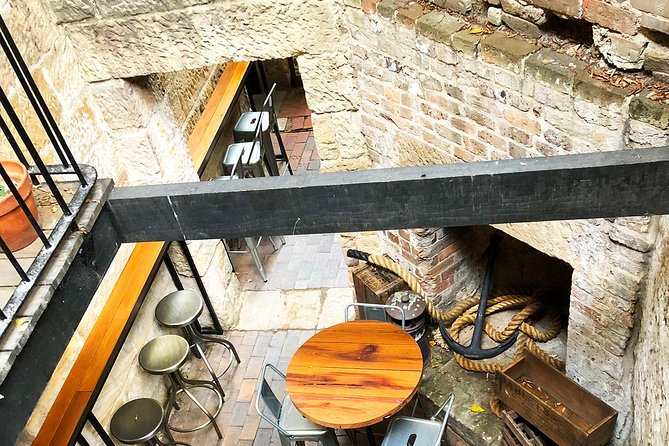
After that, the tour heads to the Tank Stream Fountain area, tied to Sydney’s original fresh-water source. The story here isn’t about romance; it’s about survival. Fresh water was one of the main reasons Sydney Cove became viable as a settlement, and the Tank Stream system is a big part of that.
You’ll hear how the convict colony needed water nearby and why the cove’s location mattered. The practical takeaway is that this tour doesn’t treat water as background—it treats it like infrastructure that shaped daily life.
If you like history that connects to basic needs (water, food, safety, movement), this stop is a satisfying pivot.
- Blue Mountains Small-Group Tour from Sydney with Scenic World,Sydney Zoo & Ferry
★ 5.0 · 3,709 reviews


The Rocks walking segment: back alleys, cobbled lanes, pubs, and street-gang lore
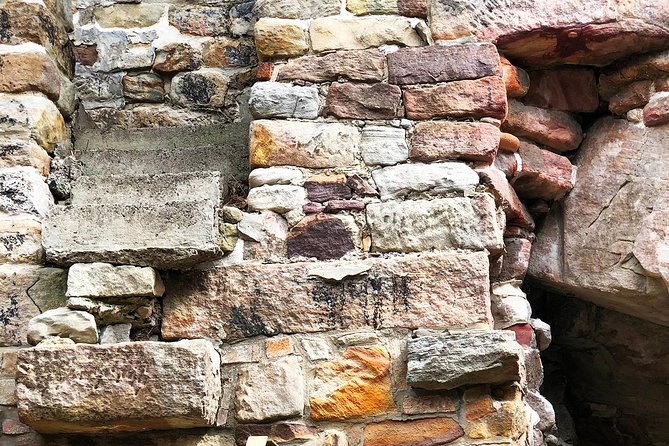
The longest part of the tour is the walk through The Rocks itself. This is where the vibe changes from “read about it” to “walk it.” You’ll follow cobbled lanes and back alleys, passing some of the oldest pubs and older houses in Sydney, while your guide links each location to a story about convicts, sailors, and street-level conflict.
This is also where the “crime historian” angle does its best work. Instead of listing names like a textbook, the guide puts the personalities and motivations into the landscape. You start to see why people grouped here, why tensions flared, and how the neighborhood’s identity formed in layers.
Group size helps a lot in this segment. With a smaller group, you get more time to ask questions instead of just rushing to the next corner. Some stops also work better with a guide’s commentary because the streetscape isn’t labeled like a museum.
Quick realism check: The Rocks terrain includes areas where you’ll hit stairs. The majority follows flatter ground, but you should wear supportive shoes. If you go in expecting a perfectly flat stroll, you’ll be annoyed by the steps.
The Argyle finish: wrap up near historic stores and pubs
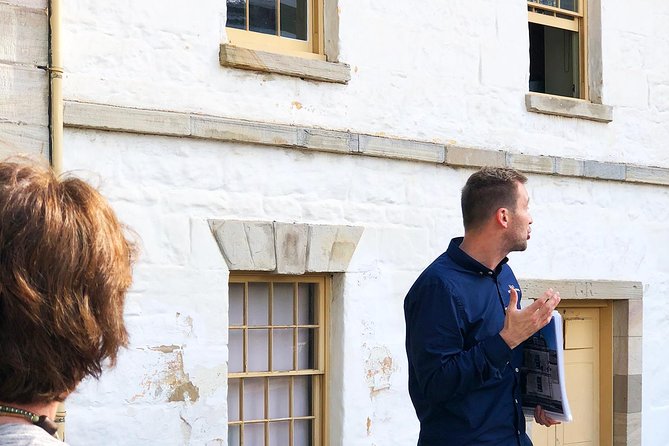
The tour ends in the heart of The Rocks near the Argyle Stores area, close to historic pubs, converted storehouses, shops, cafes, and beer gardens. The finishing point is given as Endeavour Tap Rooms on Argyle St.
This ending location is smart because it gives you options right away. The guide also provides local recommendations, which can help you transition from guided history into independent exploring. After a walk like this, having a few suggestions for where to go next (food, a museum stop, or a shorter walk) saves you from decision fatigue.
Small-group format: why max 15 makes the stories stick
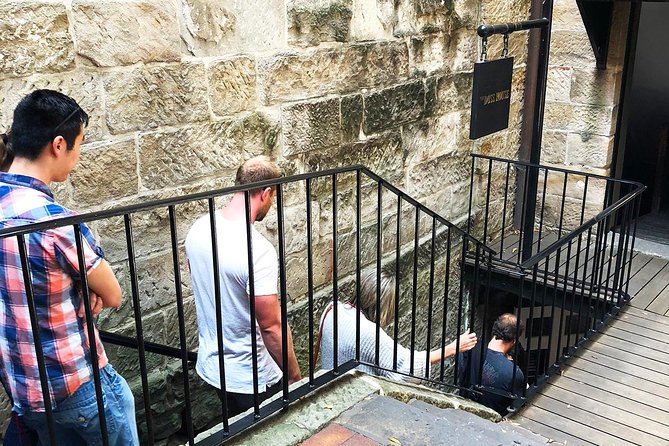
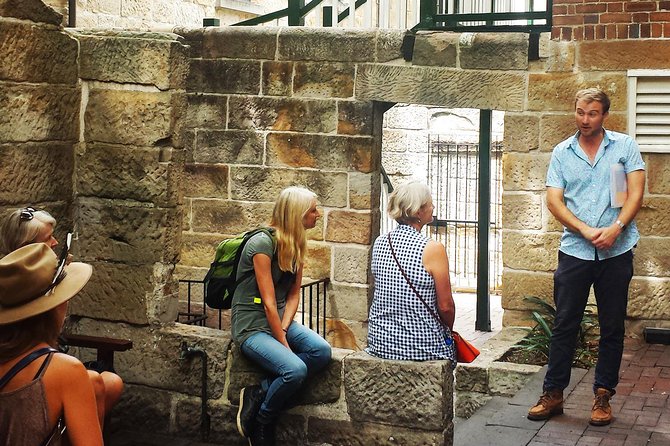
The maximum group size of 15 shows up in how the tour feels. You’re not being herded in a line. You can ask questions and get follow-ups, and the guide can keep track of who is engaged versus just waiting for the next landmark.
You’ll also get more from a historian-led approach when you can interrupt with a question. This tour encourages interaction, and that’s the difference between remembering a handful of facts and actually understanding the pattern behind them.
The tour also runs with an A3 visual folder featuring maps and portraits. That’s more useful than it sounds. When you’re walking, your brain needs little “anchors” to connect what you’re hearing to what you see.
Timing and pacing: about 2.5 hours, heavy on walking but not extreme
The tour runs about 2 hours 30 minutes and covers around 20 historic sites and stories. That’s a lot of content for a walking format, but the itinerary is built as a sequence—Customs House, relics in Macquarie Place Park, Tank Stream, then the main The Rocks area, and finally Argyle Stores.
It’s not designed as a power walk. Expect steady movement, then short pauses to take in details and pictures. If rain is likely, build in the idea that you’ll be moving with umbrellas or quick shelter breaks.
Weather, clothing, and shoe advice for The Rocks
This tour continues in all weather conditions, so dress for the outdoors. Umbrellas are a good idea if wet weather is on the forecast. And because The Rocks includes stairs at certain points, shoes matter more than usual.
If you’re visiting in cooler months or you get periodic wind off the harbor, bringing a light layer helps. If you’re sensitive to slippery stone, slow down on cobbles and let the guide set the pace.
Price and value: what $37.30 buys you in real terms
At $37.30 per person, this tour competes well in a city where “guided walking history” can get overpriced fast. The value isn’t only the guide. You’re also getting:
- a small-group format (max 15)
- a crime historian lens on convict-era Sydney and street-level stories
- visits that include Customs House entry
- a visual folder with maps, portraits, and historic images
Food isn’t included, so you’ll want a plan for lunch or a snack afterward. That said, the guide’s local recommendations can help you find a good nearby stop without guessing.
I think this is a good buy if you’re new to Sydney or you want context before you start doing museum hopscotch. It also works as a first-day anchor: you learn the “why,” then you can explore the “what” later on your own.
Who this tour fits best (and who might want something different)
This tour fits you if:
- you want convict-era context for Sydney’s waterfront
- you like crime-story angles tied to real places
- you’d rather walk and listen than sit through a lecture
- you enjoy seeing how small remnants (anchors, obelisks, old infrastructure) connect to bigger historical shifts
You might skip it if you strongly prefer architecture or modern neighborhoods only, with minimal discussion of conflict and crime. Also, if stairs and uneven ground are a deal-breaker, it may feel more tiring than you want.
Should you book this Convicts and The Rocks walking tour?
Yes, if you want a focused history walk that helps you read the streets of The Rocks. I like the way the tour combines dramatic port history with tangible stops—Customs House inside, the scale model, the First Fleet anchor, and the Tank Stream story—and then ties it all together with a historian guide who keeps questions welcome.
Book it earlier in your trip. You’ll get more out of the stories when you can return to the area later with clearer context. And if you’re the type who enjoys learning how real people lived—water, food, tensions, everyday survival—this tour will feel like money well spent.
FAQ
What is the duration of the Convicts and The Rocks walking tour?
The tour is about 2 hours 30 minutes.
How much does the tour cost?
The price is listed as $37.30 per person.
Where does the tour start and where does it end?
It starts in front of Customs House at Circular Quay (Journey Walks meeting point) and ends in The Rocks near Endeavour Tap Rooms on Argyle St.
How many historic sites and stories are covered?
The experience covers around 20 historic sites and stories.
Is Customs House entry included?
Yes. You visit inside Customs House as part of the tour.
Is food included?
No, food is not included. The guide will share local recommendations.
Is the tour suitable for most people?
Most travelers can participate. The route mostly follows flat terrain, but some stairs are unavoidable at certain points.
Does the tour run in bad weather?
The tour continues in all weather conditions, and you’re advised to dress accordingly. If it’s canceled due to poor weather, you’ll be offered a different date or a full refund.
What group size should I expect?
Groups are kept small, with a maximum of 15 travelers.
You Might Also Enjoy



More Walking Tours in Sydney



More Tours in Sydney
- Blue Mountains Small-Group Tour from Sydney with Scenic World,Sydney Zoo & Ferry
★ 5.0 · 3,709 reviews



More Tour Reviews in Sydney
- Blue Mountains Small-Group Tour from Sydney with Scenic World,Sydney Zoo & Ferry
★ 5.0 · 3,709 reviews