REVIEW · SYDNEY
Sydney Walking Tour including The Rocks (small group)
Book on Viator →Operated by Sydney's Wonders Tours · Bookable on Viator
Sydney tells its story one street at a time. This Sydney walking tour by Sydney’s Wonders Tours strings together tens of thousands of years of Indigenous wisdom, convict-era struggles, and colonial ambition, starting in the city center and finishing in The Rocks. I like the small group size (max 16), which keeps the pace friendly and questions easy. I also like how the guide (often named Lily in this tour’s reports) ties landmarks together with clear, human stories you can remember.
One possible drawback: it’s a 2.5-hour walk with lots of stops to stand and listen. On a hot day, you’ll want sun protection and water, especially because the tour moves through open streets as well as shaded lanes.
In This Review
- Key things to know before you go
- Hyde Park to The Rocks: a smart way to learn Sydney fast
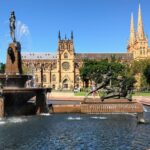
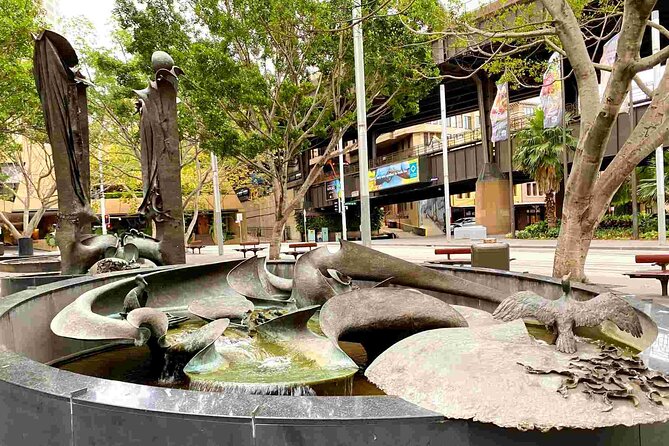
- Meeting at Archibald Fountain: where the walk really starts
- Hyde Park basics: the city’s green anchor and war memory
- St. Mary’s Cathedral: a European-style landmark in the middle of Sydney
- Hyde Park Barracks: convict prison to immigration depot to UNESCO site
- Queen’s Square and the court precinct: law as a city-building tool
- Sydney Eye Hospital and the Rum Hospital story
- Macquarie Street: Parliament-era power and the rhythm of government
- Royal Botanic Garden: plants with Aboriginal connection
- Old Government Stables and the Conservatorium: horses, then music
- The Edge of the Trees: a quiet, meaningful artwork moment
- Macquarie Place Park and Customs House: early public space and trade power
- The Rocks: cobblestones, convict-era lanes, and story streets
- Campbells Cove finish: views, photos, and a convenient next step
- Price and value: what $32.28 buys you
- What makes the guide experience work (and what to expect from the pace)
- Who should book this Sydney walking tour?
- Should you book? My quick decision guide
- FAQ
- How long is the Sydney Walking Tour including The Rocks (small group)?
- What’s the group size limit?
- Where do I meet for the tour?
- Where does the tour end?
- What time does the tour start?
- Is admission included for the stops?
- Is the tour suitable for someone with moderate physical fitness?
- Are service animals allowed?
- Do I need a mobile ticket?
- What is the cancellation policy?
Key things to know before you go
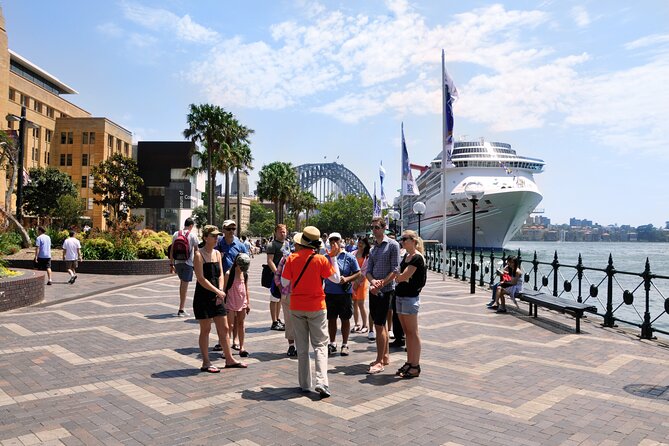
- Max 16 people keeps the tour from turning into a herd. You get attention and you can hear explanations.
- 60,000 years of context is the theme, not just a pile of famous buildings.
- Many sites have free entry, so you’re mostly paying for the walking guidance, not admission fees.
- The Rocks stops are the payoff, with laneways tied to convict life and later underworld stories.
- Campbells Cove is a smart finish, with harbour views and easy access to Circular Quay for food and transport.
- Comfort matters: wear shoes you trust and bring sun gear.
Hyde Park to The Rocks: a smart way to learn Sydney fast
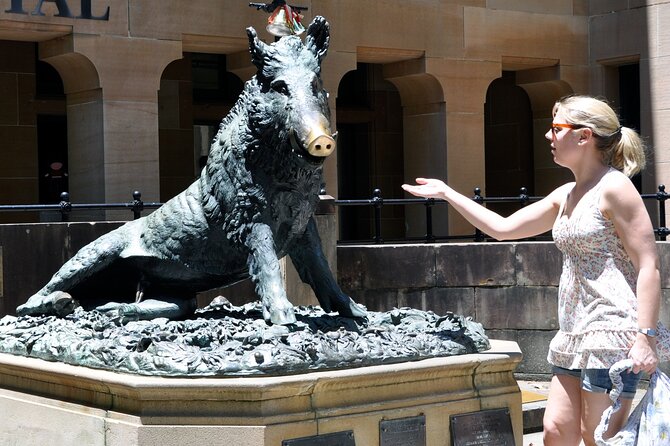
This tour is designed for getting your bearings quickly. You start where Sydney’s civic life begins to take shape, then you move outward and downward—historically speaking—toward The Rocks, where early settlement life left thick fingerprints on the streets.
The big value here is the way the guide connects eras. Instead of treating each stop like a separate fact card, you get a running storyline: land and people before Europeans arrived, then the tough years of early settlement, followed by the legal and civic buildings that grew around those early realities. That context makes later sights easier to understand on your own days.
For history fans, it’s a strong sampler. For first-timers, it’s also practical. You’ll leave knowing what to revisit, what to skip, and what neighbourhood rhythm feels right for you.
You can also read our reviews of more walking tours in Sydney

Meeting at Archibald Fountain: where the walk really starts
You’ll meet at the Archibald Memorial Fountain in Hyde Park North, near Hyde Park’s edge at 110 Elizabeth St. The start time is 10:30 am, which is helpful: you get daylight before the afternoon heat hits hard, and you’ll still have time to explore on your own after the tour.
A mobile ticket is used, and the tour is near public transport. That matters because Circular Quay and the CBD are easy to reach, but you still don’t want to waste time hunting your meeting spot. Also, the tour allows service animals, and it’s set for travelers with at least moderate physical fitness.
Small group size (16 max) is more than a nice detail. It affects what you experience. You’re more likely to hear answers to your questions, and you won’t constantly stop and restart because the group is too large to manage tight laneways.
Hyde Park basics: the city’s green anchor and war memory
The first stretch uses Hyde Park as your context-setting stage. Hyde Park is Australia’s oldest park, right in the middle of the city. You get breathing room immediately, which helps because the tour begins with history before it ramps up toward The Rocks.
You’ll also notice the memorial landscape that Sydney uses to remember national service. The guide points out key statues and features, and you’ll walk away seeing Hyde Park as more than a park you pass through on your way to something else.
A practical note: Hyde Park gives you shade and open space, but it also depends on the time of day. If it’s sunny, plan to take advantage of shaded pockets when you can.
St. Mary’s Cathedral: a European-style landmark in the middle of Sydney
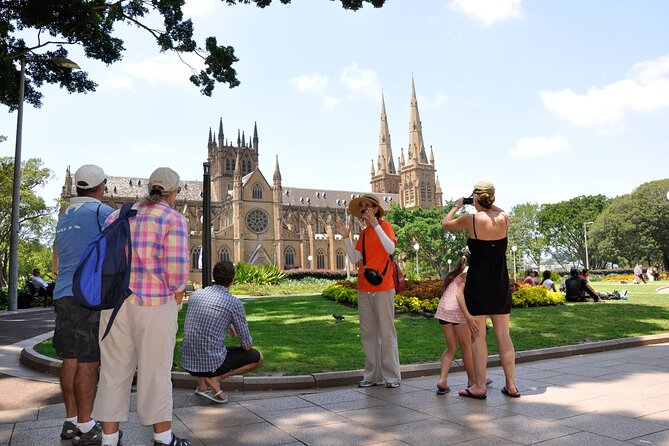
Next up is St. Mary’s Cathedral, a major Catholic landmark with striking Gothic architecture. If you’ve ever seen big European cathedrals and wondered how that style arrived in Australia, this stop helps you connect the dots.
The guide uses it to talk about heritage and community life, not just the building’s look. You get the sense of how Sydney’s identity has layered over time—like the city is a stack of eras, and you’re peeking at each layer.
This stop is short, so keep your expectations simple: it’s a orientation moment. You’ll get a feel for the cathedral’s place in Sydney’s story, then move on.
Hyde Park Barracks: convict prison to immigration depot to UNESCO site
Hyde Park Barracks is one of the most memorable learning points on this walk. It’s a UNESCO World Heritage site, and you’ll hear how it started as a convict prison and later served as an immigration depot.
That shift matters. It shows how power and migration worked in early Sydney. The barracks weren’t just housing. They were part of how the colony processed people—first as punishment, then as controlled beginnings for new arrivals.
If you like stopping at sites where the purpose of the building changed over time, this is a strong one. You’re not just looking at stone. You’re learning how the system worked.
- Blue Mountains Small-Group Tour from Sydney with Scenic World,Sydney Zoo & Ferry
★ 5.0 · 3,709 reviews
Queen’s Square and the court precinct: law as a city-building tool
From there you head to Queen’s Square, surrounded by prominent legal buildings, including the Supreme Court and the Law Courts Building area.
It’s easy to think of courts as modern. Here, the guide frames the precinct as part of Sydney’s growth—how formal authority developed as the colony matured. You’ll start to see the CBD as a kind of map of power.
This is a quick stop, but it’s useful. Afterward, you’ll have an easier time noticing civic buildings when you’re walking around later.
Sydney Eye Hospital and the Rum Hospital story
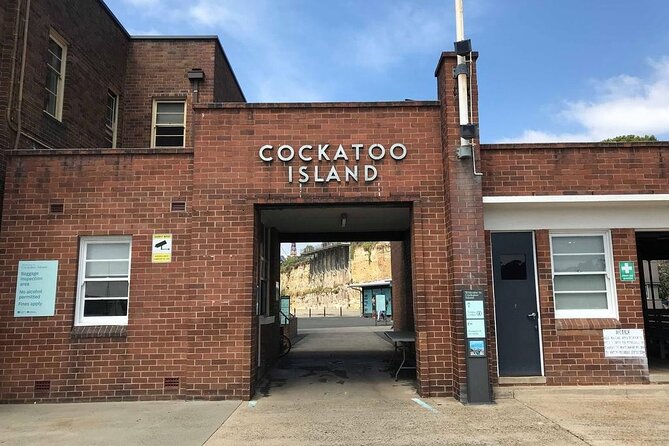
One of the more unusual story threads is tied to Sydney Eye Hospital, often connected with the older Rum Hospital tale.
The guide explains the rum-linked deal behind its creation and emphasizes what early settlers faced. It’s a reminder that even something as specific as medical care was shaped by economics and the quirks of survival in a new colony.
This is also a good reminder for your own planning: early Sydney didn’t just build big monuments. It built systems and services to keep people alive, even when money and supply were complicated.
Macquarie Street: Parliament-era power and the rhythm of government
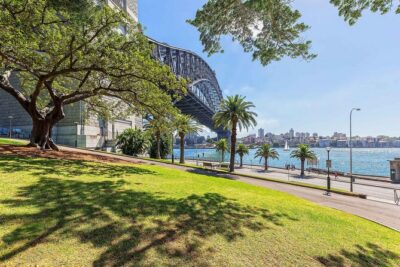
Macquarie Street is where Sydney’s official backbone becomes visible. You’ll walk along with sights that include Parliament House and other government buildings.
This section works well because the guide keeps tying architecture to function. You’re not just recognizing names. You’re learning why this street became central to decision-making and public life.
It’s also a classic “take notes for later” area. When you walk it again on your own, you’ll spot details the first time you pass them.
Royal Botanic Garden: plants with Aboriginal connection
Next you reach the Royal Botanic Garden Sydney. The guide connects the garden to Aboriginal culture, and you’ll walk through a living reminder that “nature” in Australia isn’t separate from culture.
The Garden’s value in this tour is context. You’re not being asked to become a botanist in 10 minutes. You’re being shown that plants, land, and knowledge are linked—and that Sydney’s “pretty” spaces can carry serious meaning.
If you’re sensitive to pollen or allergies, keep that in mind. Gardens can trigger symptoms even on mild days.
Old Government Stables and the Conservatorium: horses, then music
At the Sydney Conservatorium of Music stop, you’re really looking at a transformation. The guide points out that this historic building was once the Governor’s stables for horses and carriages, and it later became the home of the Conservatorium of Music.
That’s an easy stop to enjoy because the purpose has changed but the architecture is still here. It’s a visual lesson in how cities repurpose their buildings instead of starting from scratch.
If you like hearing how heritage buildings get new jobs, you’ll like this one.
The Edge of the Trees: a quiet, meaningful artwork moment
Then comes The Edge Of The Trees, an artwork that reflects the intersection of Aboriginal and European cultures.
This is a short stop, but it gives the tour a needed pause. After walking through courtrooms, barracks, and civic power, this moment turns the focus toward memory, reflection, and the messy overlap of histories.
On a day when you feel “museum fatigue,” this helps reset your attention.
Macquarie Place Park and Customs House: early public space and trade power
Macquarie Place Park gives you a small but meaningful piece of Sydney’s early public story. The guide highlights it as the city’s first public space and notes the presence of artifacts connected to that past.
From there, you move toward Customs House. This is where the tour shifts into logistics and trade: Customs House was the heart of managing ships and goods arriving by sea. It’s a reminder that Sydney wasn’t only a penal colony. It was also a trading hub that connected people, materials, and money.
If you enjoy learning how economies shape cities, Customs House is a great match.
The Rocks: cobblestones, convict-era lanes, and story streets
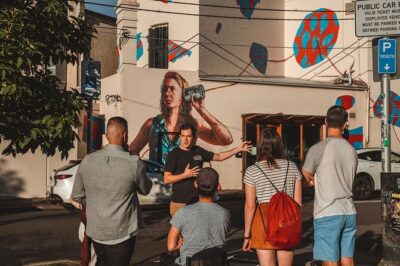
Now you’re in the main event area. The tour spends time in The Rocks itself, where cobblestone lanes and sandstone buildings help you picture the convict past.
What I like about arriving here after the earlier CBD stops: the Rocks doesn’t feel random. It feels like the logical next chapter. You understand why these lanes mattered and how the city’s growth pushed and pulled life into this corner.
Then you work through several specific lanes and streets:
- Suez Canal: a narrow laneway with a reputation tied to criminals and shadowy characters. It helps you imagine how people moved when the official world didn’t offer many options.
- Nurses Walk: a charming laneway connected to the city’s earliest nurses, with attention to the challenges faced by pioneer women. This is a different angle on early life, more human and personal.
- Playfair Street: a street that captures the feel of everyday activity. It’s the kind of place where you’ll later realize how much you missed by rushing past.
- Argyle Street and George Street: these round out the “past meets present” picture. You’ll see how the area has changed while still keeping recognizable historical bones.
You’ll finish this block with a stronger sense of where to wander next on your own. The Rocks is full of reasons to get lost. This tour helps you get lost in the right direction.
Campbells Cove finish: views, photos, and a convenient next step
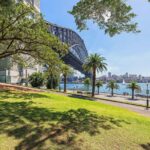
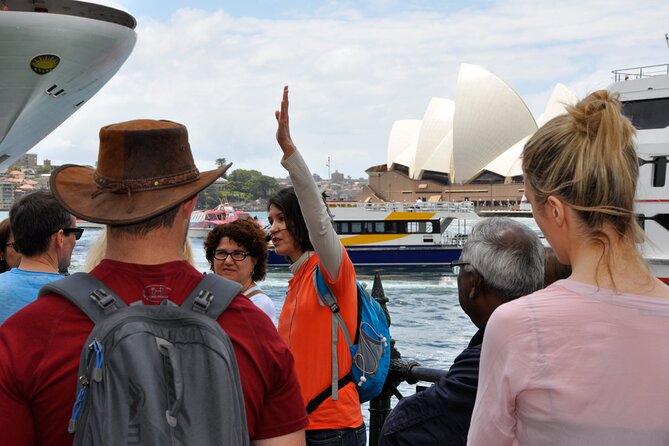
The tour ends at Campbells Cove at Circular Quay. That’s a smart finish because you get harbour views, including the Opera House and Harbour Bridge area.
You also get practical payoff: you’re close to public transport, local pubs, and the weekend market setup around The Rocks. If you want lunch without a long commute, this is the kind of ending point you’ll appreciate.
Even if you’re not a photo person, it’s worth taking 5 minutes here just to reset your brain after hours of street stories.
Price and value: what $32.28 buys you
At $32.28 per person for about 2 hours 30 minutes, this is good value for one big reason: many stops are tied to free admission. You’re paying mainly for the guide’s time and the way you get connected, explained, and paced through the area.
You’re also buying something harder to measure: context. Instead of bouncing between unrelated attractions, you get a single thread that makes each place click. That saves you time later, because you’ll know what to return to and what to treat as background.
Small group size (16 max) is part of the value math too. In a city like Sydney, the distance between “I heard everything” and “I missed half the story” is often group size.
What makes the guide experience work (and what to expect from the pace)
The best part of this tour is the storytelling style. Many past experiences point to guides like Lily giving explanations that are clear, engaging, and attentive to comfort. On hot days, the guide slows things down in a practical way and uses shade when possible.
The pacing is also a real factor. The walking is described as easy for many people, often mostly downhill. That doesn’t mean it’s zero-effort. It means you’re unlikely to be fighting steep hills the whole time, which helps keep the tour enjoyable.
Bring comfortable shoes. This is also a good tour to do earlier in your trip. When you have the CBD and The Rocks timeline in your head, everything you see afterward feels more organized.
Who should book this Sydney walking tour?
This fits you if:
- You want a first-time overview of Sydney and The Rocks without spending days piecing it together.
- You like history told through real streets, not just inside buildings.
- You prefer small groups and conversation-friendly pacing.
You might want to choose something else if you:
- Hate walking for 2.5 hours even at a moderate pace.
- Need lots of quiet time, because this is a guided story format with standing and listening at stops.
Should you book? My quick decision guide
Book it if you want a structured way to learn Sydney’s key places and then use that knowledge to explore on your own later. The mix of Hyde Park civic life, convict-era landmarks, and The Rocks laneways gives you a rounded view without dragging you through too much.
Skip it only if you’re not up for a moderate walk and don’t enjoy guided explanations. Otherwise, this is the kind of tour that helps your whole trip make more sense, starting right from Hyde Park.
FAQ
How long is the Sydney Walking Tour including The Rocks (small group)?
The tour runs about 2 hours 30 minutes.
What’s the group size limit?
This small-group tour is limited to a maximum of 16 travelers.
Where do I meet for the tour?
You meet at the Archibald Memorial Fountain, Hyde Park North, 110 Elizabeth St, Sydney NSW 2000.
Where does the tour end?
The tour ends at Campbells Cove, 4 Circular Quay W, The Rocks NSW 2000.
What time does the tour start?
The start time is 10:30 am.
Is admission included for the stops?
The itinerary indicates admission tickets are free at the listed stops.
Is the tour suitable for someone with moderate physical fitness?
The tour is listed for travelers with a moderate physical fitness level.
Are service animals allowed?
Yes, service animals are allowed.
Do I need a mobile ticket?
Yes. The experience uses a mobile ticket.
What is the cancellation policy?
Free cancellation is available up to 24 hours in advance for a full refund. If you cancel less than 24 hours before the start time, the amount paid is not refunded.
You Might Also Enjoy

More Walking Tours in Sydney


More Tours in Sydney
- Blue Mountains Small-Group Tour from Sydney with Scenic World,Sydney Zoo & Ferry
★ 5.0 · 3,709 reviews
More Tour Reviews in Sydney
- Blue Mountains Small-Group Tour from Sydney with Scenic World,Sydney Zoo & Ferry
★ 5.0 · 3,709 reviews