REVIEW · SYDNEY
Sydney Origin Story Walk in The Rocks
Book on Viator →Operated by Bloody Interesting Tours · Bookable on Viator
The Rocks stops being a postcard the minute someone tells the truth. This walk turns Sydney’s earliest settlement into a real-feeling story, with dark humour, sharp pacing, and places you’d walk past without noticing.
What I like most is the storytelling style: the guide brings the gritty details to life instead of dumping dates. Second, I love the built-in native tastings like wattleseed ANZAC cookies and lemon myrtle tea, so the history feels more hands-on than just watching buildings.
One thing to consider: this is a walking tour with set stops and an easy-but-present pace, so if you want a sit-down museum format, it may not fit your style.
In This Review
- Key Highlights You’ll Feel Immediately
- Why The Rocks Works Best as a Walk, Not a Classroom
- Price and Value: What You’re Really Paying For
- Meeting at 107 George St: Easy Start, Small-Group Comfort
- Stop 1: Cadman’s Cottage and the First Pulse of the Colony
- Stop 2: The Argyle and How Convicts Moved Underground
- Stop 3: Foundation Park Ruins That Still Look Like a Slum
- Stop 4: Campbells Cove Harbour Views and Colonial Shipping Life
- Stop 5: Playfair Street, Preserved Colonial Streets, and Built-Era Details
- Stop 6: Dawes Point Park Under the Harbour Bridge, Gadigal, and Military History
- Stop 7: Suez Canal and the Dark Side of Alley Life
- The Included Tastings: Wattleseed ANZAC Cookies and Lemon Myrtle Tea
- Pace, Tone, and the Role of a Guide Who Performs
- Who This Tour Suits Best
- Quick Logistics and What to Expect at the End
- Should You Book the Sydney Origin Story Walk?
- FAQ
- How long is the Sydney Origin Story Walk in The Rocks?
- How much does it cost per person?
- Where does the tour start?
- What time does the tour start?
- How many people are in the tour?
- Is this tour near public transportation?
- Are service animals allowed?
- Are admission tickets required at the stops?
- Does the tour include tastings?
- What happens if the weather is bad?
Key Highlights You’ll Feel Immediately
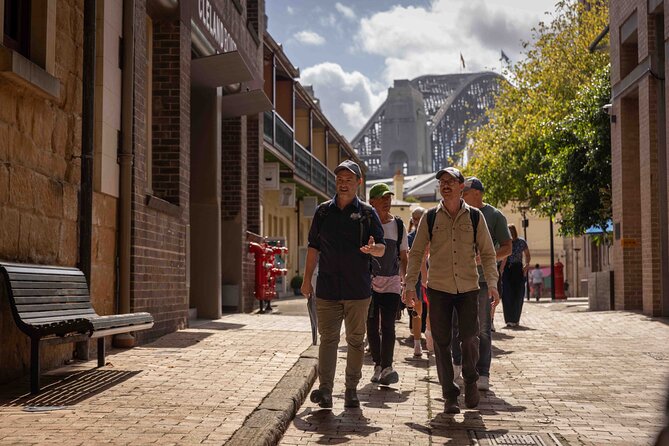
- Small group (max 10): more conversation, less standing around.
- Ed’s TV-director energy: dramatic delivery that keeps the tone entertaining.
- Convict-era sites in a tight route: tunnels, cottages, ruins, and alleys without backtracking.
- Native flavours included: wattleseed ANZAC cookies and lemon myrtle tea.
- Big views at the Harbour: you get the scenery and the shipping/military context.
- Dark humour with a point: the stories are punchy, not sanitized.
Why The Rocks Works Best as a Walk, Not a Classroom
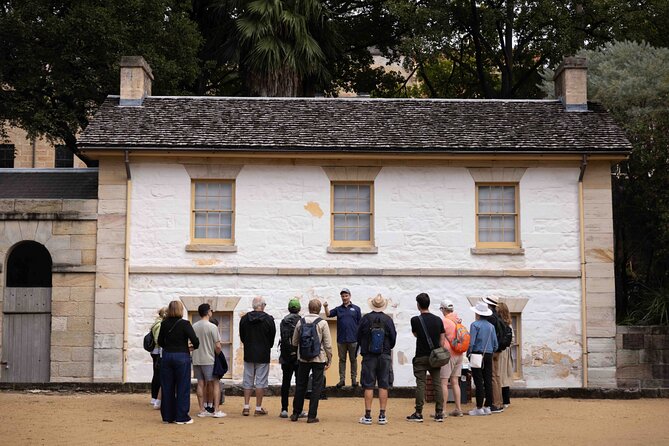
The Rocks is one of those parts of Sydney where the ground has been busy for centuries. You can read plaques all day, but plaques don’t show you how people actually moved, hid, worked, drank, and fought. On this Sydney Origin Story Walk, you’re guided through the places that shaped the earliest colony—then you get the human details that explain why the streets feel the way they do.
This isn’t the dry, all-facts-and-no-smile kind of history tour. The guiding approach is more like a well-paced radio drama: a clear sense of what happened, why it mattered, and how it connects street to street. If you’re into convict stories, colonial politics, or simply want the city to make sense faster, this format helps you get your bearings fast.
Also, the tone matters. The humour is dark, but it’s used to make the material easier to hold in your head. That means you leave with more than random details—you leave with a mental map of the colony and the people who survived it.
You can also read our reviews of more tours and experiences in Sydney.
Price and Value: What You’re Really Paying For
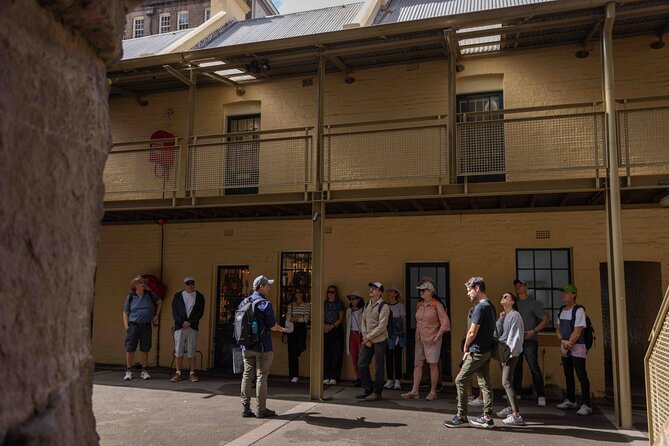
At $48.77 per person for about 2 hours 30 minutes, you’re not just paying for access to public sights—most of the stops are admission ticket free. You’re paying for three things:
First, you’re paying for a professional guide who knows how to turn place into story. Second, you’re paying for the time saved—this route is designed so you don’t waste hours bouncing around the area. Third, you’re paying for the included tasting—wattleseed ANZAC cookies and lemon myrtle tea—which adds a memorable, local touch.
There’s also the “experience size” factor: with a maximum of 10 travelers, you’re more likely to get real interaction and attention rather than feeling like you’re part of a moving crowd.
If you enjoy history when it’s vivid, a bit messy, and told with pace, the value feels solid.
Meeting at 107 George St: Easy Start, Small-Group Comfort
The walk starts at 107 George St, The Rocks NSW 2000, with a 9:30am start time. The meeting point is in the heart of The Rocks, so you’re not trying to find a remote trailhead in a city maze.
You’ll also appreciate the small group size. A tour that caps at 10 keeps things flexible. It’s easier for the guide to pause, clarify, and keep the stories flowing without the constant scramble you get on bigger walks.
As a practical tip, wear comfortable walking shoes. Even with a smooth route, you’ll be on foot for the better part of the afternoon-style block (2.5 hours), and The Rocks streets involve small slopes and uneven edges. Bring water if you run warm, and keep an eye on weather—this experience runs only in good weather and can shift if conditions are poor.
Stop 1: Cadman’s Cottage and the First Pulse of the Colony
You kick things off at Cadman’s Cottage, described as Sydney’s oldest surviving residential building and a convict base. That combination is the hook: this isn’t just a cute heritage house. It’s a physical reminder that early Sydney was built under pressure—people lived in the machinery of the colony.
The value here is timing. Starting at a place like this gives context for everything that follows. As you walk, you start noticing the colony pattern: housing, work, punishment, escape routes, and the way the harbour shaped daily life.
Drawback to watch for: if you’re hoping for a lot of standing-room viewing space at the first stop, it’s more about the story connection than long lingering time. The pace is designed to move.
Stop 2: The Argyle and How Convicts Moved Underground
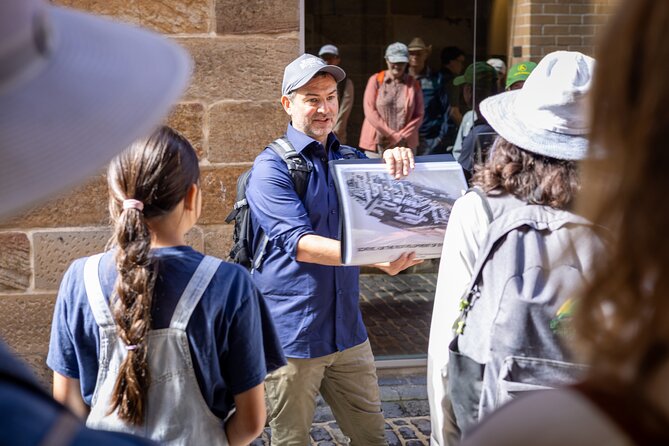
Next comes The Argyle, including a dramatic convict-hewn tunnel linking Millers Point and The Rocks. Tunnels always make history feel closer. Instead of imagining movement, you’re standing where people literally carved passages and tried to control access.
This stop works because it changes your mental map. After this, the neighbourhood doesn’t feel like separate streets. It feels connected by hidden routes—places where you’d move fast, keep out of sight, and avoid trouble when the colony’s rules were harsh.
One consideration: since it’s about the tunnel, you’ll want to follow the guide closely and listen carefully. This is the kind of stop where the meaning lands through narration.
- Blue Mountains Small-Group Tour from Sydney with Scenic World,Sydney Zoo & Ferry
★ 5.0 · 3,709 reviews

Stop 3: Foundation Park Ruins That Still Look Like a Slum
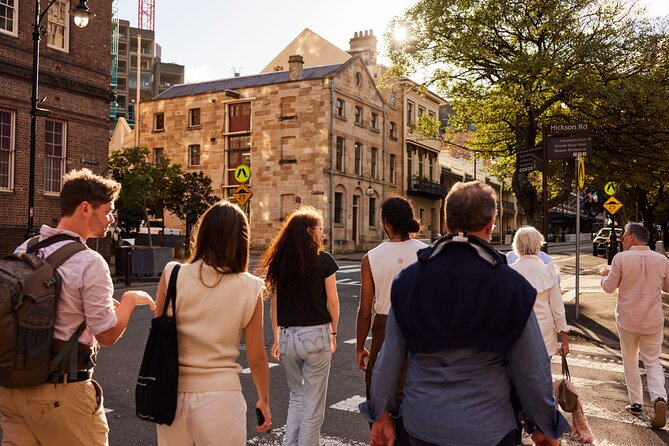
Then you reach Foundation Park, where you can see sandstone ruins linked to a former slum. Seeing ruins is powerful because it’s honest about how fragile life can be. Buildings didn’t always last; living conditions certainly didn’t.
The best part of this stop is how it shifts your understanding from big colonial narratives to everyday survival. Convict stories are often told like grand drama. Here, the visuals push it back toward lived hardship—what people built, what they couldn’t fix, and how the area evolved.
Tip for getting more from this stop: watch the ground details as you stand. Even without a museum-style explanation, ruins help your brain build the timeline.
Stop 4: Campbells Cove Harbour Views and Colonial Shipping Life
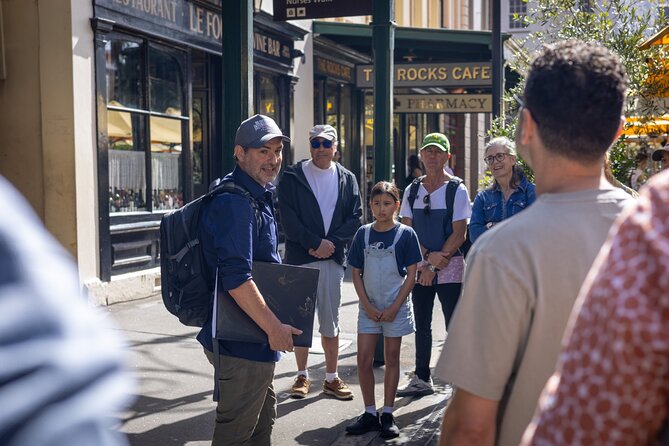
At Campbells Cove, the tour moves into view territory—harbour scenery with the added layer of colonial shipping history. This is where Sydney’s geography becomes part of the storyline. Ports weren’t just scenic. They were the colony’s supply chain, labour route, and escape valve.
You’re likely to remember this stop for two reasons. First, it gives you a break from tight alleys and built-over spaces. Second, it ties the harbour to the colony’s survival logic—who arrived, what they carried, and why maritime movement shaped crime, opportunity, and control.
If you’re the type who wants both story and photos, this is a strong one to pause and look around before the group moves on.
Stop 5: Playfair Street, Preserved Colonial Streets, and Built-Era Details
From there you head through Playfair Street, noted for iconic thoroughfares lined with preserved colonial buildings. This is where you start seeing the “street as document” concept.
Instead of only learning about convicts and scandals, you also get a feel for the city’s construction timeline—how streets were laid out, how buildings held their shape, and how the area kept traces of earlier eras even as Sydney modernized.
This stop can be a little quick, but that’s part of the value. You’re not stuck staring at one block waiting for the group. You get just enough to connect it to what comes next.
Stop 6: Dawes Point Park Under the Harbour Bridge, Gadigal, and Military History
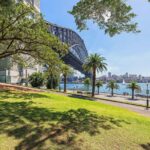
The tour then heads to Dawes Point Park, a lookout beneath the Harbour Bridge with deep context: it was the former site of the colony’s first gun battery, and it connects to Gadigal history and military events.
This stop is important because it broadens the story beyond a single time period. It reminds you that the land carries meaning before and after colonization, and that the harbour wasn’t just an economic zone—it was a strategic one.
What I like here is the contrast. The bridge is loud and modern, but the spot under it is quiet enough to feel like a viewpoint with weight. The guide helps you read the space, not just photograph it.
Practical note: you’ll want to stay aware of footing near viewpoints and follow the group. It’s a lookout area, so people sometimes drift.
Stop 7: Suez Canal and the Dark Side of Alley Life
Finally, you reach Suez Canal, an alleyway once known for sly grog, brothels, and push gangs. It’s the kind of detail that makes The Rocks feel like more than architecture. It gives you the gritty social side of the early colony—where rules existed, but people still found ways around them.
This is also a stop where the guide’s humour matters. The stories could easily become sensational if they weren’t grounded in place. Here, the alley description is used to explain how urban space shaped behaviour: tight lanes make transactions easier, concealment easier, and conflict easier to escalate.
If you’re sensitive to heavier content themes like crime and exploitation, it’s smart to set expectations going in. This tour doesn’t shy away from the real texture of the past.
The Included Tastings: Wattleseed ANZAC Cookies and Lemon Myrtle Tea
One of the nicest surprises is the stop for native flavours: wattleseed ANZAC cookies and lemon myrtle tea. Food is a simple way to anchor memory. Instead of remembering only place names, you remember taste, scent, and a small moment of pause mid-walk.
It also breaks the standard “walk, listen, walk, listen” rhythm. You get a natural reset. That helps you stay sharp for the later stops, especially the darker alley story.
If you’re the kind of person who likes local ingredients and doesn’t need everything to be formal, this portion is a clear win.
Pace, Tone, and the Role of a Guide Who Performs
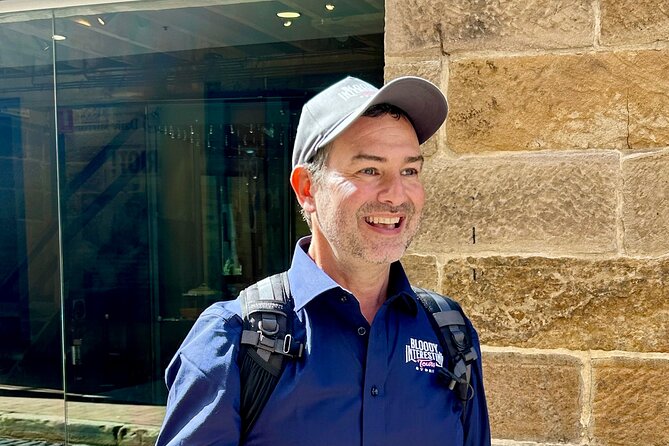
A huge part of why this tour lands well is the guide’s delivery. In past experiences with Bloody Interesting Tours, the guide named Ed has been described as having huge energy and a strong ability to keep people engaged. That matches what you want from a city walk through intense subject matter: a voice that guides you through without turning the tour into a lecture.
The pace feels designed for attention rather than endurance. You’re moving between stops that each have one clear takeaway. Then you’re back on your feet quickly enough to keep momentum.
This also helps if you’re short on time in Sydney. With 2 hours 30 minutes, you get a concentrated version of what makes The Rocks feel different—convict-era architecture, hidden passages, and harbour context—without turning your day into all walking and no breathing room.
Who This Tour Suits Best
This is a good fit if you:
- want The Rocks to make sense quickly through story and place
- like convict-era Sydney, social scandals, and survival themes
- prefer a guide who uses humour and drama to keep you listening
- enjoy small-group tours where you feel seen
It’s less ideal if you want a strictly academic walk with minimal humour and fewer gritty themes. Also, if you require frequent long stops to rest, a set route may feel a bit tight—though the tour is described as most travelers can participate and the time at each stop is fairly short.
Quick Logistics and What to Expect at the End
The route stays in The Rocks, starting at George Street and ending back in the same area. You finish with the chance to keep exploring on your own right after, without needing extra travel planning.
One more detail to note: the walk is known for a pub finale, which suits the storytelling vibe. It’s a nice way to end with something social and familiar after the heavy material.
Should You Book the Sydney Origin Story Walk?
Book it if you want a fun, story-driven way to understand the earliest parts of Sydney—and you’re okay with history that includes crime, punishment, corruption, and survival. The price makes sense for what you get because the sites themselves don’t cost much to access, while the guide’s performance and the included tasting make the experience feel purposeful.
Skip it if you’re chasing a quiet, classroom-style tour or if you’re not interested in the darker side of The Rocks. In that case, you might prefer something calmer and more interpretive.
If you’re somewhere in the middle—curious, open, and ready to see The Rocks with better context—this is the kind of tour that gives you a sharper city in less time.
FAQ
How long is the Sydney Origin Story Walk in The Rocks?
The tour lasts about 2 hours 30 minutes.
How much does it cost per person?
It costs $48.77 per person.
Where does the tour start?
The meeting point is 107 George St, The Rocks NSW 2000, Australia.
What time does the tour start?
The start time is 9:30am.
How many people are in the tour?
The tour has a maximum of 10 travelers.
Is this tour near public transportation?
Yes, it is near public transportation.
Are service animals allowed?
Yes, service animals are allowed.
Are admission tickets required at the stops?
The tour lists stops with admission ticket free, including Cadman’s Cottage, The Argyle, Foundation Park, Campbells Cove, Playfair Street, Dawes Point Park, and Suez Canal.
Does the tour include tastings?
Yes. You’ll taste native flavours including wattleseed ANZAC cookies and lemon myrtle tea.
What happens if the weather is bad?
The experience requires good weather. If it’s canceled due to poor weather, you’ll be offered a different date or a full refund.
You Might Also Enjoy

More Tour Reviews in Sydney
- Blue Mountains Small-Group Tour from Sydney with Scenic World,Sydney Zoo & Ferry
★ 5.0 · 3,709 reviews