REVIEW · SYDNEY
Private Walangari’s Aboriginal Walking Tour in Bondi Beach
Book on Viator →Operated by Walangari Karntawarra and Diramu Dance & Didgeridoo Aboriginal Experiences · Bookable on Viator
Bondi gets a new meaning on this walk. You start with a didgeridoo ceremony, then follow Walangari Karntawarra (a Bondi local elder) as he connects geology and social history to what you see around the cliffs and beach. It’s a private, question-friendly tour that turns a famous shoreline into a living place.
I especially like two things: the chance to learn the meanings behind ancient Aboriginal rock carvings right on the route, and the way the experience stays practical with audio help for translation when needed. One consideration: it’s weather-dependent, and you do need to be comfortable with an outdoor walking pace (it’s described as gentle and downhill).
In This Review
- Key highlights you should know before you go
- Meeting Walangari Karntawarra at North Bondi
- The didgeridoo ceremony: more than atmosphere
- Stop 1 at Bondi Beach: carvings, bush foods, and coastal time travel
- What you see first
- Ancient rock carvings on the route
- Bush foods and medicines growing along the way
- Walangari’s family story and the changing coastline
- Questions, audio support, and group comfort
- Ending at Bondi Pavilion and the optional Diramu performance
- Price and value: what $710.07 per group really means
- Logistics that matter: timing, weather, and how to plan your day
- Who this tour fits best (and who might want a different format)
- Should you book Walangari’s Bondi Aboriginal Walking Tour?
- FAQ
- Where does the tour start?
- Where does the tour end?
- How long is the private Aboriginal walking tour?
- How much does it cost?
- Is this a private tour?
- What happens if translation is needed?
- Do they include a didgeridoo ceremony and performance?
- Is the tour run in all weather?
- What is the cancellation policy?
Key highlights you should know before you go
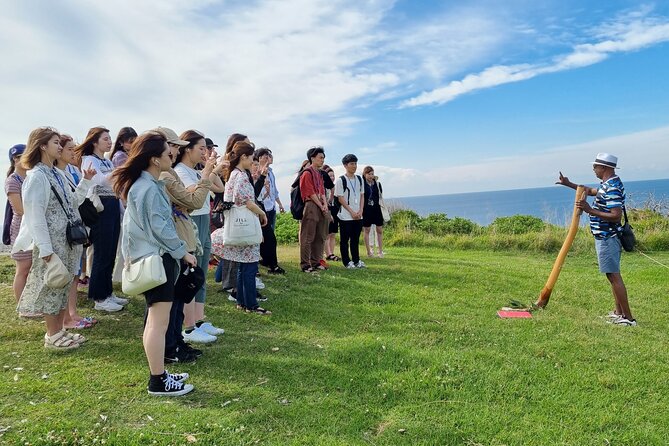
- Elder-led storytelling from Walangari Karntawarra, an Arrernte elder, artist, educator, and performer who lives locally in Bondi
- Didgeridoo welcome at the start of the walk, setting a ceremonial tone before you move
- On-route cultural interpretation, including rock carvings and bush foods/medicines that grow along the track
- Coastal history explained visually, including how the coastline has formed and changed over time
- Audio transmitter support if you need translation through a group leader or translator
- Optional Diramu performance after the walk (extra fee): interactive dance and didgeridoo
Meeting Walangari Karntawarra at North Bondi
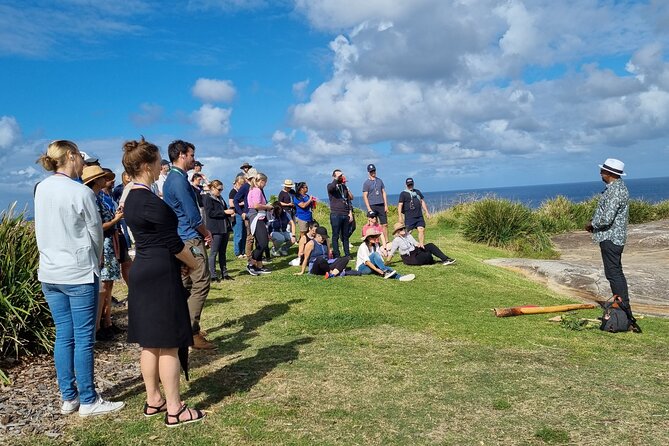
This tour is built around one person: Walangari Karntawarra. He’s not just a guide. He’s described as an Aboriginal Australian elder, artist, educator, and performer, and he’s also a Bondi local. That matters because the story isn’t delivered like a slideshow. It’s spoken in place, tied to what the group can actually see—rock, coast, and the living plants along the way.
You meet at North Bondi Golf Course, on the corner of Blair St and Military Rd. From there, you’re quickly oriented to the cliff views over the Pacific. The ceremony start is also a strong signal that this is cultural knowledge, not just sightseeing. You’ll begin the walk with a didgeridoo ceremony, which helps most groups settle in and listen closely before the history starts.
You can also read our reviews of more walking tours in Sydney

The didgeridoo ceremony: more than atmosphere
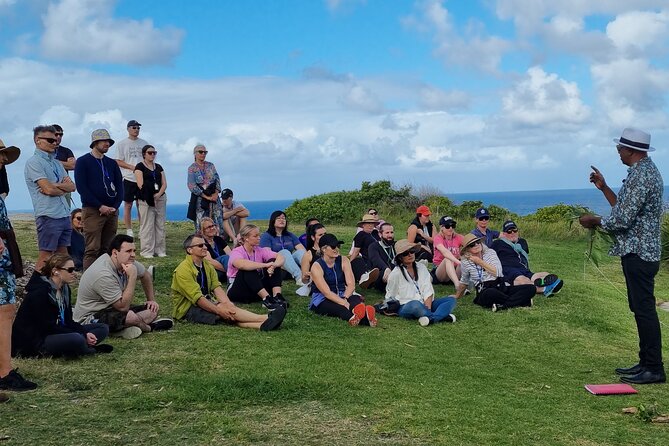
The didgeridoo part isn’t just sound for fun. In this format, it works like a reset for your senses. You’re standing near the cliffs, looking out over Bondi, and then the walk begins with a ceremony led by Walangari. That first moment changes the feel of the tour because you’re not rushing into facts. You’re first invited into the setting and the meaning of listening.
It also helps with group energy. If you’ve ever tried to learn history while people are still half-thinking about lunch plans, this kind of start makes it easier to focus. And since it’s a private tour, your group can move at a pace that fits questions and comfort.
Stop 1 at Bondi Beach: carvings, bush foods, and coastal time travel
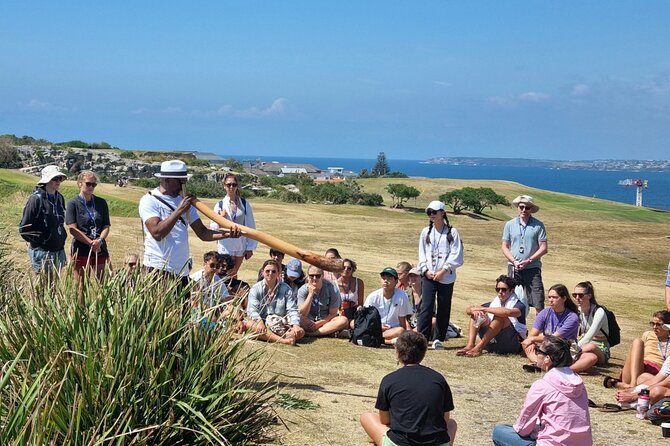
This is the main event, and the walking portion is described as a gentle downhill walk. The route runs along the North Bondi side, with the ocean view working as a constant backdrop.
What you see first
Early on, you pass Ben Buckler Gun Battery, a heritage-listed fortified former gun emplacement named after a local bushranger who lived in a cave nearby. This gives you a classic Bondi contrast: European-era fortifications and stories layered over much older presence.
You’ll also see examples of art deco architecture as you take in the beach atmosphere. It’s a reminder that Bondi isn’t just one era. It’s multiple eras stacked together—coastal views, built heritage, and long-standing Indigenous connections to place.
Ancient rock carvings on the route
One of the most praised parts of the tour is the chance to see ancient Aboriginal rock carvings and have them explained. The key value here is location. Carvings aren’t shown as isolated museum objects. You learn their meanings where they were made, in conversation with the surrounding coast and terrain.
That’s what turns a photo stop into actual understanding. You start paying attention to how the land tells its own story: shapes, rock features, and the fact that the culture’s presence is visible if you know how to look.
You can also read our reviews of more private tours in Sydney
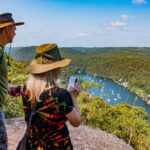
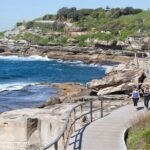
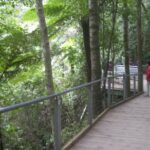



Bush foods and medicines growing along the way
Another standout is that Walangari doesn’t only point to stone and history. He also identifies Aboriginal bush foods and medicines still growing along the route. That’s practical knowledge, and it shifts the tour from the past into the present.
Even if you don’t plan to forage or use traditional remedies, learning which plants are part of living knowledge changes how you perceive the coastal vegetation. You stop treating plants as generic background and start seeing them as part of a system of knowledge tied to the land.
Walangari’s family story and the changing coastline
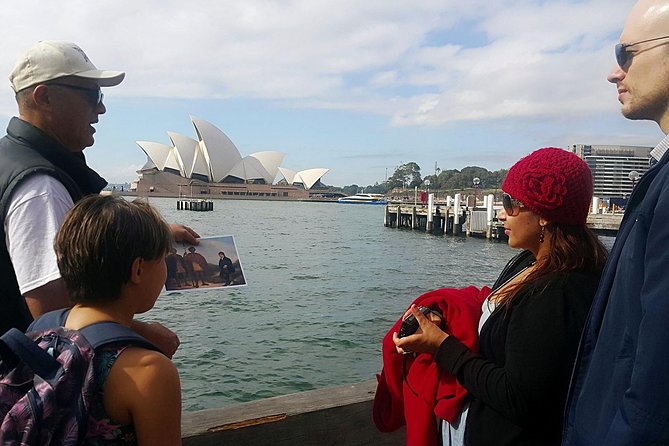
A good guide makes history human. Walangari’s approach includes both the big picture and personal threads. He discusses the formation of and changes to our coastline over the ages, helping you understand Bondi as something shaped by time, not just geography you happened to arrive at.
He also shares his own Aboriginal family history. One detail included in the tour discussions is that there’s an Afghan forbear in his central Australian family story. It’s the kind of detail that keeps the talk from feeling sealed off from real human life. You get a sense of continuity, movement, and connection—rather than just a one-note presentation.
Questions, audio support, and group comfort
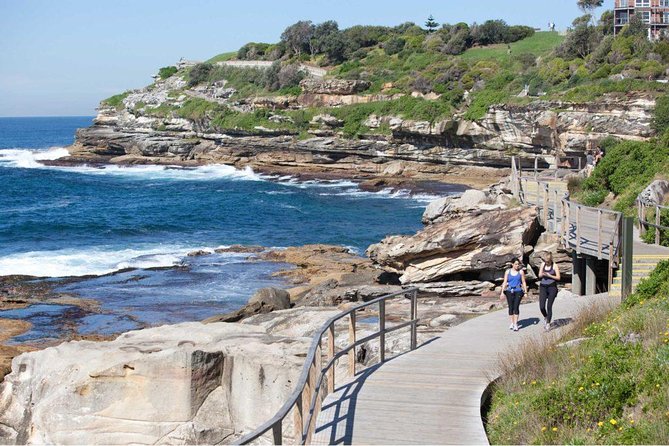
This is not a lecture that cuts off questions. You have time to ask about the world’s oldest living culture and about what you’re seeing along the way. For a lot of people, that’s the real value: you can ask what you care about, right then, while you’re standing where the story makes sense.
Also, if translation is needed, the tour includes an audio transmitter for a translator or group leader. That matters because it prevents the common problem of everyone standing around trying to hear through noise or missing key points. If you’re traveling with someone who benefits from audio support, this is one of those small features that can make the difference between a “nice walk” and a genuinely meaningful one.
Group size is private. The standard format is up to 15 people per group. There’s also an option to take up to 38 walkers for an additional fee, which suggests they can scale the experience if you’re booking with a larger group and want the same elder-led approach.
Ending at Bondi Pavilion and the optional Diramu performance
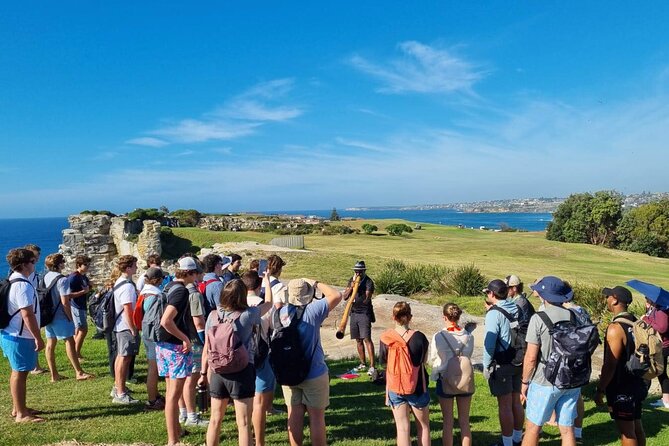
The walking tour finishes at Bondi Pavilion on Queen Elizabeth Dr. This is a convenient end point because it’s a known landmark on the beach side, and it gives you a natural place to gather, share notes, and transition back into your day.
There’s also an optional add-on: an interactive cultural performance by Diramu Aboriginal Dance and Didgeridoo for an additional fee. If you want the walk to be one part of a bigger cultural experience, this can be a good way to continue the story after you’ve learned what to look for.
If you’re short on time, you can likely treat the performance as a bonus. But if your group loves music, movement, and active participation, it’s worth considering so you don’t end the experience right as the energy peaks.
Price and value: what $710.07 per group really means

The tour price is $710.07 per group, for up to 15 people. That’s a lot on the surface. Here’s the practical way to think about it: it’s paying for a private, elder-led, culturally grounded guide plus a tour design that isn’t just “walk and talk.”
If you’re booking near the group maximum, the per-person cost can work out to roughly $47 each (710.07 ÷ 15). If your group is smaller, the per-person number goes up. So this is best when you can fill the group with friends or family.
In terms of what you’re buying, the value leans on:
- access to a recognized elder educator and performer (Walangari Karntawarra)
- ceremonial start (didgeridoo)
- field-based learning on rock carvings and bush foods/medicines
- question time and audio support for translation if needed
- a private experience that can be more comfortable than joining mixed-size crowds
Also, it’s typically booked about 46 days in advance on average. That doesn’t mean it’s impossible to get last-minute, but it does suggest you’ll have an easier time planning if you lock your date sooner.
Logistics that matter: timing, weather, and how to plan your day
The tour runs about 1 hour 30 minutes. The start window isn’t listed here as a specific departure time, but the meeting point and ending point are clear, and the stated hours for the overall service run 9:00 AM to 5:00 PM.
The tour requires good weather. If conditions are poor and it has to be canceled, you should expect either a different date or a full refund. Practically, you’ll want to build this into a flexible day on your itinerary. If Bondi is the one day you have zero flexibility, you might prefer having a backup plan nearby.
Because it’s a downhill walk described as gentle, comfort is generally manageable. One reason parents-style groups tend to like this format is that the pace is not positioned as an all-out hike. Still, it’s outdoors and you’ll be walking along the route, so wear decent footwear and bring sun protection.
Who this tour fits best (and who might want a different format)
This tour is a strong choice if you want:
- firsthand interpretation from an Aboriginal elder who is also a performer and educator
- a real chance to ask questions, not just passively hear facts
- Indigenous knowledge tied directly to what you can see in Bondi, like rock carvings and bush plants
- an option for translation support through audio transmitters
It can also suit multi-generational groups. If you’re bringing older relatives, the fact that the walk is described as gentle is a plus, and audio support can reduce stress for anyone who struggles with hearing.
If your group expects a broad city highlights tour or wants lots of stops and viewpoints every few minutes, this may feel more focused than you’re used to. The itinerary is centered on one main walking route and its key features.
Should you book Walangari’s Bondi Aboriginal Walking Tour?
I think you should book this if you care about more than Bondi photos. This tour turns Bondi into a place with deep meaning: you start with a didgeridoo ceremony, you learn how rock carvings and bush foods/medicines connect to living knowledge, and you get coastal history explained in a way that feels grounded in the land.
It’s also a good fit when your group can share the cost and keep it private. At $710.07 per group, it’s not a “cheap add-on,” but private elder-led learning like this is the kind of thing that can change how you see a destination.
Book it when the weather looks cooperative and when your group is ready to listen, ask questions, and slow down for 90 minutes. If that sounds like your style, this tour is a smart, authentic choice for Bondi.
FAQ
Where does the tour start?
The tour starts at North Bondi Golf Course, at the corner of Blair St and Military Rd (North Bondi NSW 2026).
Where does the tour end?
The tour ends at Bondi Pavilion on Queen Elizabeth Dr, Bondi Beach NSW 2026.
How long is the private Aboriginal walking tour?
The duration is about 1 hour 30 minutes.
How much does it cost?
The price is $710.07 per group (up to 15 people).
Is this a private tour?
Yes. It’s a private tour/activity, meaning only your group participates.
What happens if translation is needed?
There is an audio transmitter available for a translator or group leader, if required.
Do they include a didgeridoo ceremony and performance?
You begin with a didgeridoo ceremony. There’s also an optional extra-fee performance by Diramu Aboriginal Dance and Didgeridoo after the walk.
Is the tour run in all weather?
The experience requires good weather. If it’s canceled due to poor weather, you’ll be offered a different date or a full refund.
What is the cancellation policy?
You can cancel for free up to 24 hours before the experience’s start time for a full refund. If you cancel less than 24 hours before, the amount paid is not refunded.
You Might Also Enjoy


More Walking Tours in Sydney



More Tours in Sydney
- Blue Mountains Small-Group Tour from Sydney with Scenic World,Sydney Zoo & Ferry
★ 5.0 · 3,709 reviews


More Tour Reviews in Sydney
- Blue Mountains Small-Group Tour from Sydney with Scenic World,Sydney Zoo & Ferry
★ 5.0 · 3,709 reviews