REVIEW · SYDNEY
illi-Langi The Rocks Aboriginal Dreaming Tour
Book on Viator →Operated by Dreamtime Southern X · Bookable on Viator
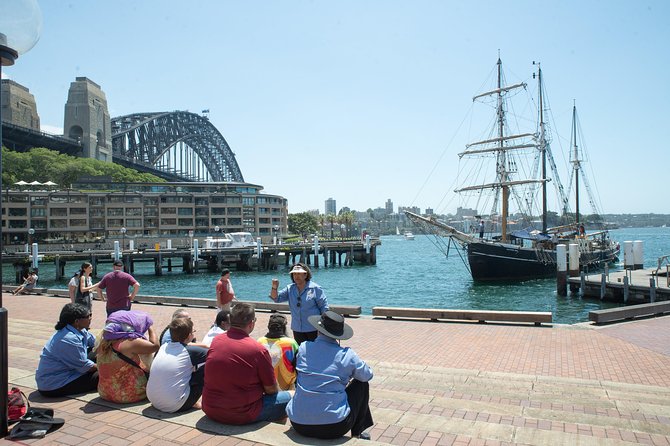
The Rocks has a second story. This illi-Langi The Rocks Aboriginal Dreaming Tour is a focused 90-minute walkabout led by an Aboriginal guide, connecting Dream Time ideas to everyday Sydney. You start near Cadman’s Cottage and move through places like Argyle Cut and Dawes Point, where the details you’re shown change how you read the city around the harbour.
I especially like the way the tour begins with an ocher hands-on moment and an acknowledgement to Country. I also like the stop choices: the harbour-area sites aren’t treated like random sightseeing, but as part of a living story about saltwater life, names, and meaning.
One heads-up: this is an outdoor, street-level walk, so you’ll want to be ready for some sun and stepping around. Bring water (especially on hot days) and wear shoes you can handle.
In This Review
- Quick hits
- Cadman’s Cottage start: welcome to Country and an ochre activity
- Argyle Cut: Earth Mother’s ochre on the wall
- Dawes Point Park under the harbour bridge: names and meaning
- Hickson Road Reserve: recent rock art and ancient “art galleries”
- Campbells Cove and Sydney Harbour: saltwater life and spiritual sites
- The Rocks walk: illi-Langi in a living city
- Price and value: what $33 buys you (and why it feels fair)
- How to prepare so the tour clicks with you
- Should you book the illi-Langi The Rocks Aboriginal Dreaming Tour?
- FAQ
- How long is the illi-Langi The Rocks Aboriginal Dreaming Tour?
- Where do I meet and where does the tour end?
- What’s included in the tour price?
- Do I need to bring water?
- What’s the group size limit?
- Can I cancel for a full refund?
Quick hits
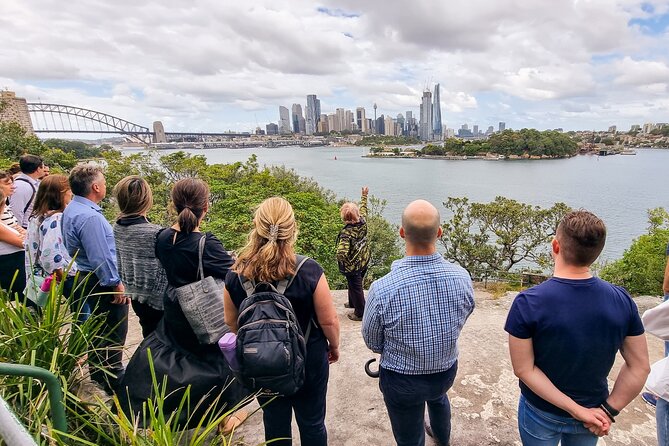
- Max 25 people keeps things small and easier to hear on a walking route
- Ocher activity at the start gives you a practical way to understand natural materials
- Argyle Cut’s ochre story links art/pigment to Earth Mother and the geology around the area
- Harbour Bridge, Campbells Cove, and Circular Quay are part of the teaching not just photo stops
- Rock art and traditional “art galleries” get pointed out in a way that makes the history feel close
- Meet and finish at Cadman’s Cottage so your trip is easy to fit into a day of city walking
Cadman’s Cottage start: welcome to Country and an ochre activity
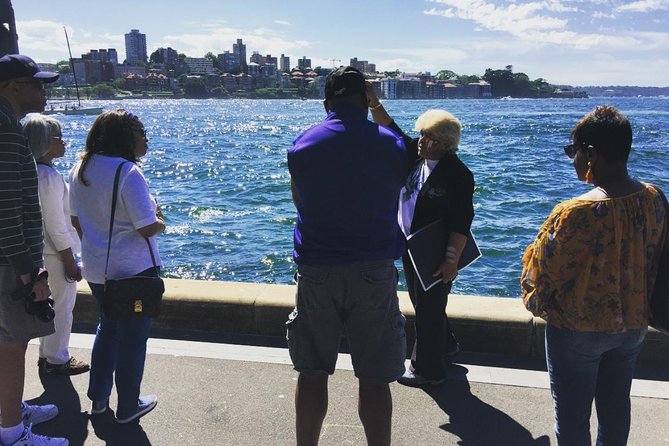
You meet at Cadman’s Cottage at 110 George St, The Rocks, starting at 10:30 am. This matters more than it sounds: Cadman’s Cottage is a clear landmark, and you’re also in an area with good public transport links, so you’re not stuck planning a complicated arrival.
Right at the beginning, the tour starts with an acknowledgement to Country and an ochre activity. Then you step right into Bligh Barney Reserve, which sits next to the cottage. The teaching here focuses on natural resources, using seasonal native flora and fauna as the backdrop. That’s a great way to set the tone, because it reminds you that Aboriginal culture isn’t only about ancient times. It’s tied to what grows and lives around you now.
What you should expect from the ochre part: it’s not presented as a museum object. It’s treated as a natural material connected to country—something you understand through the guide’s explanation and a short interactive moment. If you’ve only seen ochre mentioned in passing, this is the kind of early activity that helps everything later make more sense.
A practical note: the opening time is fixed, so try to arrive a little early. On a small-group walk, being late can place you at the back for the start, when the core framing happens.
You can also read our reviews of more tours and experiences in Sydney.
Argyle Cut: Earth Mother’s ochre on the wall
Next comes Argyle Cut, a short stop that stays memorable because of what the guide points out. Here, the focus is on the importance of Earth Mother’s ochre, and you learn that ochre can exist in large clay pods on the walls of Argyle Cut.
That one detail does a lot of work for your understanding. It turns ochre from a vague cultural reference into something you can locate in the physical world. You stop to look at what’s right there, and suddenly the city’s textures become part of the story rather than just scenery.
This is also one of the stops where the format (a quick, guided pause) helps. A longer stop might turn into a lecture you can’t absorb while standing in public. Instead, you get a tight, specific point, then you move on.
If your goal is to see how culture and geology intersect, Argyle Cut is a must-do moment. Even if you’ve been to The Rocks before, this is the kind of stop that changes what you notice when you walk past the cut.
Dawes Point Park under the harbour bridge: names and meaning
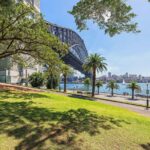
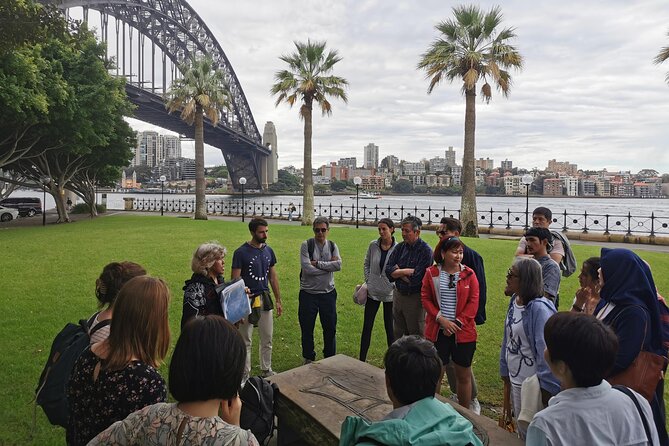
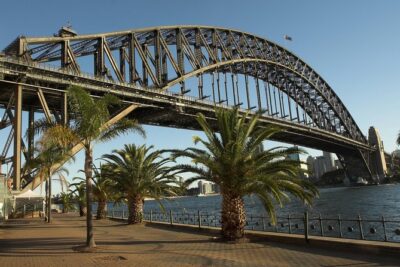
Then you’re at Dawes Point Park, located under the harbour bridge with harbour views. The standout here is that you’re taught the Aboriginal name and importance of this significant site, not just the obvious visual wow-factor.
This is a smart contrast with standard city tours. Most harbour tours point to the bridge and keep going. Here, the teaching pushes you to slow down and ask: what did this place mean before it became a tourist landmark?
The Dawes Point stop is short—about 10 minutes—so you’ll want to listen for the name and the why behind it. Names often carry information about relationships to resources, movement, and the way people understood the area. When you hear the Aboriginal name explained in context, it sticks better than a generic history line.
Also, the harbour views don’t distract you from learning. They support it. You’re looking at the water and city skyline while the guide connects the site to the Aboriginal story, which makes the “why” feel grounded in the same space you can see.
Hickson Road Reserve: recent rock art and ancient “art galleries”
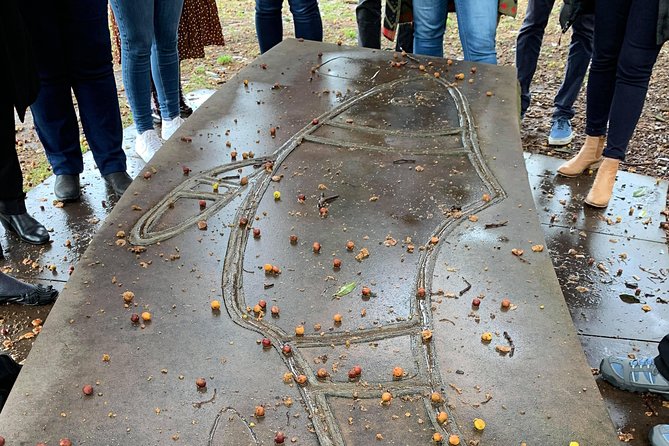
At Hickson Road Reserve, you get a chance to see an example of recent rock art. You also learn about traditional “art galleries” in the Sydney region—places described as being thousands of years old.
This stop can land differently depending on what you’ve seen elsewhere. If you’ve spent time around big-ticket museum art, it might be surprising to learn that rock art isn’t treated as something distant and sealed away. Instead, it’s framed as part of a continuing connection to country.
The practical value is in how the guide likely sets expectations. Rock art is easy to misread if you treat it like decoration. The better approach is to think of it as a record of presence, teaching, and place. If the guide is doing it well, you’ll leave with a sense of how the art fits the land, not the other way around.
Time-wise, this stop is brief (around 5 minutes). So you’ll benefit from keeping your attention on the “how to look” parts—what features matter, and why this spot qualifies as an art place in the Sydney region.
Campbells Cove and Sydney Harbour: saltwater life and spiritual sites

One of the most rewarding sections of the tour is the harbour-focused teaching at Campbells Cove, with views across Sydney Harbour. This stop is short (about 5 minutes), but it’s packed with meaning.
The guide focuses on an Aboriginal saltwater lifestyle and the spiritual importance of harbour sites. That includes references such as the harbour itself, Opera House / Bennelong Point, and Circular Quay.
If you’re the type of visitor who likes to connect modern Sydney icons to deeper layers, this is your moment. The Opera House and Circular Quay can feel like purely urban landmarks, but you’re encouraged to see them as overlays on country—places with Aboriginal names, responsibilities, and ongoing significance.
Here’s why this is valuable: it teaches you to look at the same space in two ways at once. You can still enjoy the view, but you also learn to recognize that the harbour is not just scenery. It’s a setting for relationships—food, movement, stories, and ceremony.
Because this portion is quick, don’t get lost in photo-taking. Snap if you want, but keep your ears tuned. Harbour teaching can be the kind you only hear once on a short walk.
- Blue Mountains Small-Group Tour from Sydney with Scenic World,Sydney Zoo & Ferry
★ 5.0 · 3,709 reviews

The Rocks walk: illi-Langi in a living city
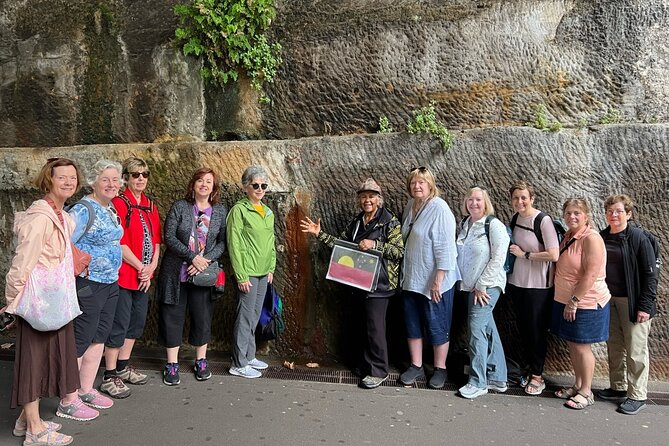
The tour culminates in the The Rocks precinct with illi-Langi in focus. This is where the longer part of your time happens (about 1 hour 30 minutes listed for the overall walk segment at this location).
This matters because the route isn’t trying to cram you through a checklist of plaques. It’s trying to create a walkabout rhythm: you learn a concept, then you connect it to a nearby place, then you move again. The Rocks is ideal for that because it’s walkable and dense with recognizable features.
Expect stories that connect daily life, spirituality, and survival in the same space. Some guides also cover how Aboriginal culture remains alive in modern Sydney—so it’s not only a history lesson. You’ll also pick up perspective on walkabout itself, which many people find is less about the myth version and more about how people moved, planned, and lived with country.
One more practical point: since you’re walking around The Rocks, your comfort matters. Cobblestones, uneven pavement, and sun exposure are real in Sydney. Bring water and plan for breaks if you need them. If you know you’ll struggle with extended walking, pick a morning slot like this one rather than a late afternoon when the heat can hit harder.
Price and value: what $33 buys you (and why it feels fair)
At $33 for an approximately 90-minute group tour, the value comes from three things: the setting, the guide, and the format.
First, you’re walking through key Aboriginal-significant areas in central Sydney, not just touring one spot. Second, the experience includes Aboriginal guide commentary, which is the heart of this type of outing. Third, the group size caps at 25, so you’re less likely to be lost in a crowd and more likely to ask a question or follow along.
Also, there’s one detail people often miss: bottled water isn’t included. The tour explicitly tells you to bring water, especially on hot days. That’s not a “gotcha,” but it does affect your real cost in small ways. Think of the price as covering the guidance and storytelling, and plan your hydration separately.
Compared with many paid city tours, this one is a low-cost entry point into a perspective you can’t get from a standard audio guide. You’re paying for interpretation and for the “why” behind place.
How to prepare so the tour clicks with you

To get the most from this kind of walk, you don’t need special gear. You need a good mindset and a few simple practical choices.
- Bring water, especially if Sydney is hot when you go. The tour’s own guidance points this out.
- Wear comfortable shoes for uneven pavement. You’ll be outside for the full walkabout style route.
- Arrive on time at Cadman’s Cottage. Starting with acknowledgement to Country and an ochre activity means early attention matters.
- Listen for names and meanings. Short stops (Argyle Cut, Dawes Point, harbour teaching) work best when you remember the specific point the guide makes.
- Ask questions if you have them, especially if something feels confusing. A short tour is only a problem when you keep your questions to yourself.
If you’re comparing this to other The Rocks options, I’d treat this one as a perspective shift. You’re not there to tick off landmarks only. You’re there to understand how the same streets and viewpoints can carry different layers of meaning.
Should you book the illi-Langi The Rocks Aboriginal Dreaming Tour?
Yes, if you want an affordable, central-Sydney introduction to Aboriginal Dreaming and the meaning of place, delivered by an Aboriginal guide, and you’re comfortable doing a walking tour at street level. The ochre start, the Argyle Cut ochre lesson, the Dawes Point under-bridge teaching, and the harbour-area saltwater connections make it feel like more than a sightseeing loop.
I’d think twice if you’re extremely sensitive to scheduling hiccups. The overall rating is strong, but there are mentions of operational problems like no-shows and booking mismatches in some past cases. If that would stress you out, build in buffer time and be ready to confirm details close to departure.
FAQ
How long is the illi-Langi The Rocks Aboriginal Dreaming Tour?
It’s listed as approximately 1 hour 30 minutes.
Where do I meet and where does the tour end?
You meet at Cadman’s Cottage, 110 George St, The Rocks NSW 2000, and the tour ends back at the meeting point.
What’s included in the tour price?
The tour includes Aboriginal guide commentary and an Aboriginal guide. Ticket admission is also included in the experience.
Do I need to bring water?
Yes. Bottled water is not included, and the tour specifically recommends bringing water, especially on hot days.
What’s the group size limit?
The tour/activity has a maximum of 25 travelers.
Can I cancel for a full refund?
Yes. You can cancel up to 24 hours in advance for a full refund. If you cancel less than 24 hours before the experience starts, the amount paid is not refunded.
You Might Also Enjoy



More Tours in Sydney
- Blue Mountains Small-Group Tour from Sydney with Scenic World,Sydney Zoo & Ferry
★ 5.0 · 3,709 reviews


More Tour Reviews in Sydney
- Blue Mountains Small-Group Tour from Sydney with Scenic World,Sydney Zoo & Ferry
★ 5.0 · 3,709 reviews